Saturday, May 15, 2010

La Dolce Vita (Italy Pt I)

When we started thinking about travel on our way home, a trip to Italy quickly reached the top of the list – for us it is a country that offers a huge amount of everything we look for in travel. Initially we had in mind basing ourselves in one place for a month or so – but our desire to see so much more of Italy than we had done already meant that this plan quickly morphed into a great big road trip – starting in Milan in the North and working our way down to the South (Sicily).

The trip didn’t have a huge amount of planning or precision behind it, but by the time we set out we had a 6 ½ week trip mapped out and accommodation along the way locked in.

It was quite a strange feeling sitting in Terminal 5 (for the second time that week) about to set out on this trip which had been in our minds for so long. One thing was certain – for us it would be the La Dolce Vita tour – the sweet life.

First stop – Milano

We started with two nights in Milan – carless – a chance to find our feet (and explore this famous city) before we set off.

Slightly disappointingly, our lack of planning was shown up for the first time, when on the bus into Milan from the airport we read that tickets to see ‘The Last Supper’, displayed here, should be purchased months in advance. Whoops – as Paola at our accommodation told us – ‘don’t worry – it’s just a painting’.

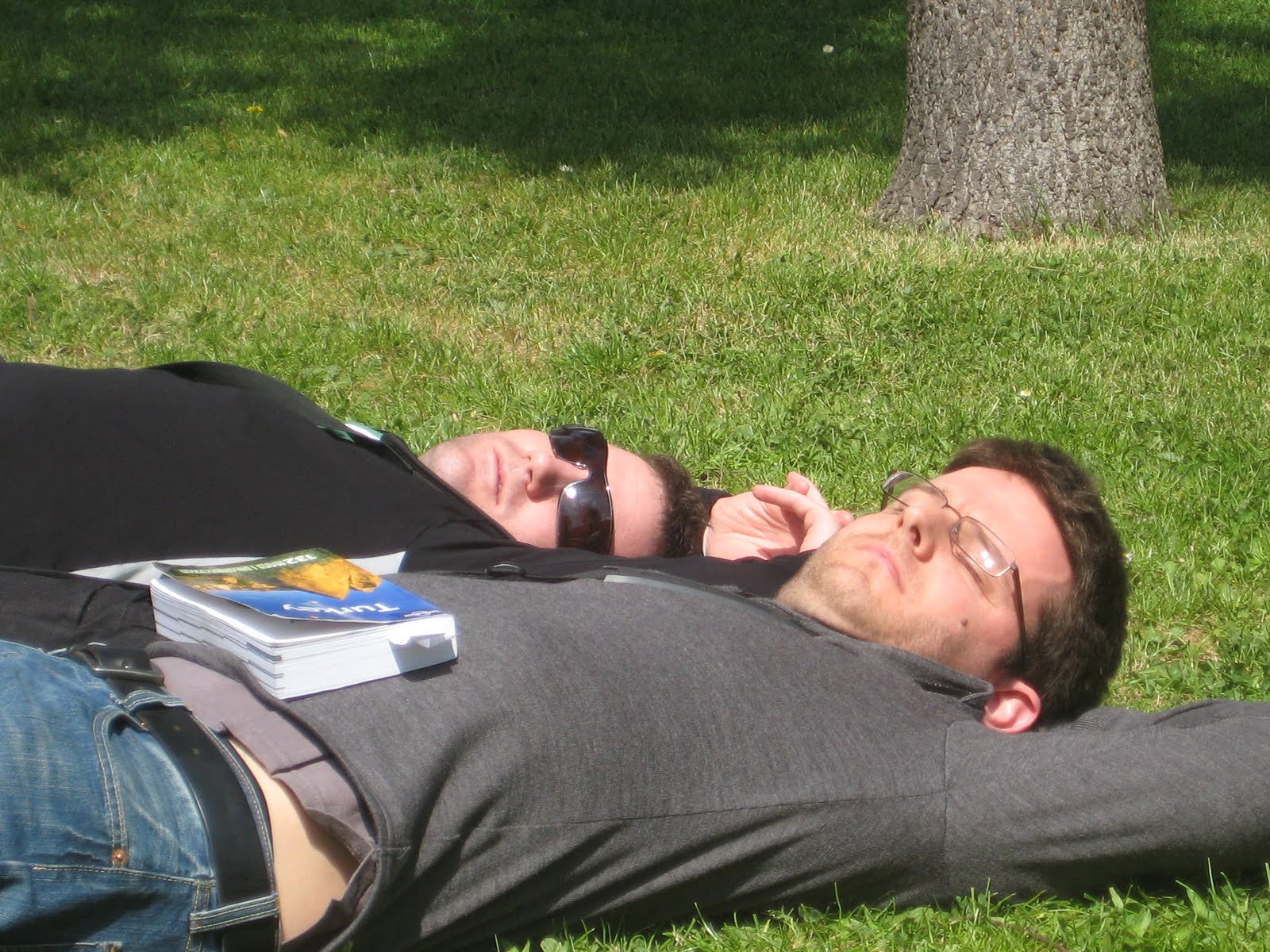
We did however get straight into our work in Milan. Before we knew it we had explored Milan’s huge Duomo (3rd largest in Europe) – this included climbing the 165 steps to the roof top where you can walk around on the sloping tile roof which is lined with carved spires and figures. We saw many other churches while in Milan – although probably the most memorable was our visit to Basilica di Sant’Ambrogio – which we stumbled on by accident (a momentary lapse in otherwise flawless map-reading). The church itself was stunning, but we happened to arrive as guests for a wedding were also arriving – so we spent the next hour or so people watching – admiring the ‘beautiful people’ as they arrived – if ever there was a reminder that the Italians are a fashionable bunch – this was it. We also spent some time relaxing in the sun in Parco Sempione (Milan’s vast central park) where the Italians walk, play sport, eat gelatti and make-out.


It will come as no surprise to those of you who know us well, that being such cultured beings, we quickly arranged tickets to the opera at ‘La Scala’ – Milan’s famous home of opera. OK, so the tickets were dirt cheap and we were on the 6th tier with limited view of the goings on down on the stage below – but it was a great opportunity to see this incredibly lavish building with six tiers of ‘box like’ seating in a horseshoe shape facing the stage. The opera itself was Lulu – a seemingly scandalous affair in which Lulu (a scantily clad woman) manipulated husbands (who seemed to drop off at a great rate of knots). Mich loved it – only falling asleep twice (once during the first half and once during the second half).


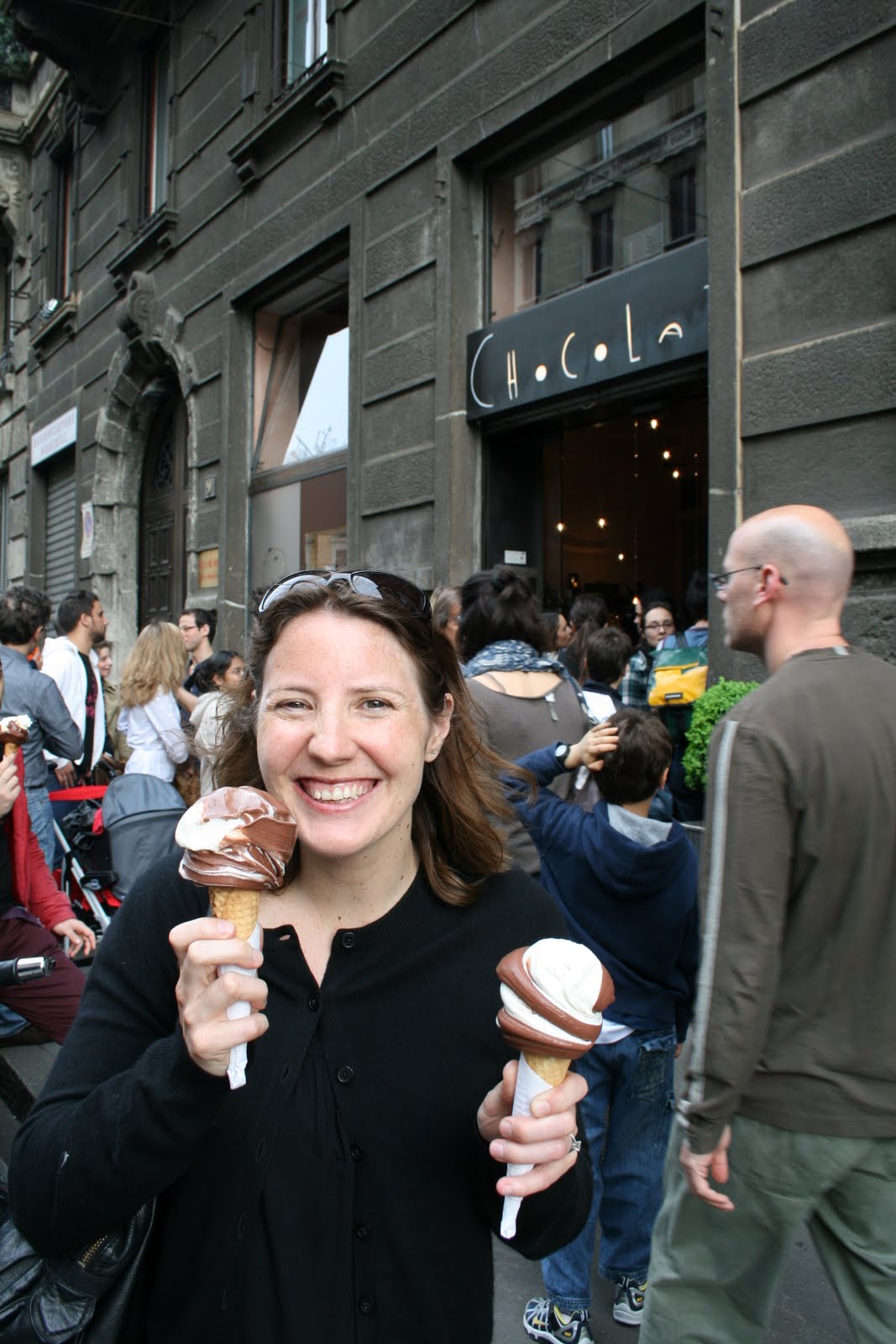
We also instituted a regime of regular gelatti (to keep us sustained during our rigorous sightseeing schedule). The best here was from a Gelateria called ‘Chocolat’. Late on Saturday it had a queue down the street (even though it is a bit out of the way) – we gave it a try and were not disappointed – a must stop on any Milan itinerary.

Cunningly, there was little scope for anything other than window shopping – Saturday shops were closed for May Day celebrations and there is limited Sunday trading. It was very cool however to wander down the cobbled lanes of the Monte Napoleone area – lined with huge flagship stores (and head offices) of the big Italy fashion houses - Versace, D&G, Prada. To do so safe in the knowledge we had no chance of slipping into one made the experience so much more relaxing for one of us…. and perhaps frustrating for the other.


Stylish people in the the fashion district

Piedmont – The Stomach of Northern Italy

If Milan is the heart of Northern Italy, then Piedmont would have to be its stomach! The ‘Slow Food Movement’ started here – whose philosophy centres around fresh local and seasonal produce, prepared in traditional ways, with an emphasis on quality over convenience/speed. It also is home to the famous (and very pricey) white truffle and its poorer cousin, the black truffle. Never one to pass up a good meal, it seemed like a natural next stop.


As if the focus on food is not enough to entice one to this lesser travelled region – they make some of the Italy’s best red wines here – the rich and robust Baralo and Barbarescos both made from the Nebbiolo grape. As it happened our accommodation here was out in the countryside just out of the small village of Alba in the heart of the Barbaresco appellation on a winery (Ada Nada). Our room looked out onto vines and our host Anna Lisa greeted us with a glass of Barbaresco (for us) in hand. Perfect.


Our first eating experience here was fairly comical. We arrived in Alba around 3pm on Sunday afternoon – a bit late for lunch even by Italian standards. Not dissuaded by this we popped into a little place (Osteria dei Sognatri). The owner greeted us - while we could have a main, it was a bit late in the day for entree and primi. Upon learning we were Kiwis the rules all changed – antipasti were served, primis arrived and succulent mains followed (rabbit and pork – yum!). The novelty of having ‘Kiwis’ was a bit surprising, as we didn’t really feel like we were ‘off the beaten track’, but next thing I knew I was on the owner’s cellphone speaking to ‘Jeff’ (I assume the only other Kiwi he knew) and who, in a favourable coincidence, was a winemaker at one of the area’s best wineries – and so it was we found ourselves with a visit and tasting agreed for the following day.


The comical nature of our visit to Alba did not stop there. Our visit happened to coincide with a flag throwing festival. It seems the Italians in this part of the world love an excuse to dress-up (people after my own heart) and this day they decided to dress-up in medieval kit (colourful stockings for the men). In teams, presumably linked to historic families/territories and which consisted of a marching band (lots of drums/trumpets) and flag throwers, they performed in the town square before a mock king and queen (who had also taken the opportunity to dress up). We later learned that in Alba they dress-up whenever they get the chance. My favourite being an annual donkey race (which they hold as a tongue in check response to the neighbouring and rival town’s (Asti) annual horse race which celebrates a historic victory over Alba in one of many previous times of war between the two. Alba itself was a pretty town –and our pick of the various places we visited in this area.


As agreed with our ‘friend’ Jeff, we found ourselves the next day at ‘Marchesi di Gresy’ for a tour and tasting. We never did meet Jeff (he was out working on the vines ahead of some bad weather), but Marina took us through the winery (including a huge underground cellar, which was carved under the hill where the grapes are grown) and through the wines. By far the best and most comprehensive of a number of tastings ‘we’ did in the area – and nice that the Kiwi connection had opened this door for us.

The track from our place to Treiso

Another happy coincidence was a restaurant we discovered up the road from us. From our accommodation there was a dirt track that led to a tiny little hill top village – Treiso. We visited it one day and noticed that for a small place, it had a very flash looking restaurant. We dug out an article in which top London based Italian chef’s talk about their favourite Italian restaurants (the vast majority of which happened to be in Piedmont) and noticed that the place in Treiso was a pick of Giorgio Locatelli (whose cookbook we love).

With it being just around the corner from us – we couldn’t pass up a meal at this place ‘La Ciau Del Tornavento’. I did a 7 course wine matched degustation here – due to the dietary constraints that come with pregnancy Michelle had to reluctantly settle for a la carte. Neither of us was disappointed. We were also treated to a tour of the immense underground wine cellar here – the second room of which is sealed with a foot thick ‘bank vault’ like metal door. With 50,000 wines from 1,200 producers in this collection, I guess the concern for security/care of the wines is understandable. (Left - in the cellar - something to aim for!)

Continuing the theme of slightly strange eating experiences, the restaurant was busy on a Monday night, partly due to the group of 50 or so PwC partners – senior partners from around the world on various automotive clients who had been bussed here (for about an hour) from Turin – the home of Fiat for a meal – testament to the reputation of this place (which on a clear day, we are told, has views to rival its food!). Slightly surreal to be so far from and yet so close to PwC. Despite the sophistication of the restaurant, we were also reminded of the fact that we were in the ‘countryside’ here, by the wild deer we encountered on the road leading up to the restaurant – if only I could have got a picture of the deer looking back at us through the vines…..

Next stop - Castelrotto in the Italian Alps.....

Sunday, May 09, 2010

Turkey - Gobble Gobble Gobble

We shut the door on our London flat for the last time, grabbed a quick pub lunch with Grover (who happened to be in the neighbourhood having arrived in the UK that morning) and before we had a chance to give it too much further thought, we were winging our way with Shane and Dena for two weeks in Turkey.


Itinerary


For those of you who just want an overview, the following is a summary of our 2 week itinerary (which excludes a few days which were largely spent driving):


  • 3 days exploring and experiencing Istanbul’s sights and markets
  • 1 day exploring Gallipoli Peninsula – a beautiful but sad place
  • 1 day in Kusadasi a coastal base from which to explore the incredible Ephesis Roman ruins
  • 1 day in Pamukkale – a spa town with ‘medicinal pools’ said to cure almost everything under the sun
  • 3 days in Kalkan – once coastal fishing village, turned Turkish holiday destination – sun, diving/kayaking – you get the picture right?
  • 1 day in Antalya – large coastal city and departure point for flight to Cappadocia
  • 2 days in Cappadocia – phallic rocks, hot air balloons and hidden cities.

Driving

Our main mode of transport in Turkey was driving. This was far less traumatic than it could have been, but all the same, this was a road trip so figure it's worth recording a few thoughts for posterity:
  • Turkey has lanes, speed limits and traffic lights - none of which seem to trouble the Turkish drivers too much. Liberal use of the wrong side of the road is commonplace, passing on blind corners a local past time, speed limits are seemingly unenforced (which has its benefits) and red lights are purely optional - with running them being both tolerated and encouraged by those behind you with 'toots' to let you know they think it is safe for you to run the light now.
  • Be wary of the 'TomTom’ shortcut - although we would have struggled without it, TomTom did take us down one or two 'shortcuts' where she decided she'd had enough of main routes and that a dirt track would liven the drive up a bit.
  • Turkish drivers do not always look in their rear vision mirror when reversing - ask our buckled number plate if you need confirmation of this fact.
  • Beware of the black cloud - you don't really want to find yourself being battered by hail the size of large ice cubes which turned once dry roads into a slush/ice river in minutes.
  • Rule of thumb for Turkish driving - if in doubt: toot.
Piles of hail on the road

Istanbul - Markets and mosques


  • Hotel Romance - hearts for as far as the eye can see.
  • Blue Mosque, Ana Sofia and the Basilica Cistern - 3 amazing sights all within a stone's throw of each other. The mosaics at Ana Sofia and the cistern (an ancient underground watery oasis) were particularly impressive.
  • Grand Bazaar - a labyrinth of shops but less chaotic and shop keepers far less pushy than anticipated.
  • Spice markets - chaos and shoulder to shoulder with people - but an amazing mix of the sweet smell of Turkish delight and spices.
  • Ferry up the Bosphorus to the Black Sea - a relaxed adventure up this incredibly busy water link with Russia (despite the “yoghurt, yoghurt, yoghurt” salesmen on the boat). Stunning seafood lunch sitting out in the sun with the water lapping beside us in picturesque Anadolu Kavagi at the top of Bosphorus.
  • Raki and Beer combos. Beware.
'Sightseeing' at the Topkapi Palace - exhausting stuff (although refer Raki and Beer combo' point above).
  • Great food - my pick was at 360^ - a top floor restaurant with great modern food with a Turkish twist and panoramic views.


Gallipoli - Lest we forget


  • A beautiful and idyllic peninsula dotted with memorials, cemeteries and walkways.
  • Visiting Chunuk Bair (where the Turkish took a strategic hold which ultimately won them the campaign, but a site where NZ troops fought and died bravely), Lone Pine (the main Australian memorial), The ANZAC memorial (sitting on the water's edge just around the corner for ANZAC cove where the forces ANZAC forces landed and the sight of the dawn service) and many other Turkish and allied memorials. The most peaceful and private site was the 4th Battalion Parade Ground Cemetery - located on the track from ANZAC cove up to the front line near Lone Pine - stunning setting nestled in bush and overlooking Shrapnel Valley and the coast.
  • Learning about the sacrifice and waste on both sides at Gallipoli.

  • Gallipoli Houses - a perfect base, with Eric the perfect host. http://www.gallipoli.com.tr/
Enjoying a cold Efes in the late afternoon sun while taking in the view across to the peninsula.


Kusadasi and Ephesus

  • En-route to Kusadasi from Gallipoli we stopped to take in Troy (yawn, or is that too harsh?) and Bergama, which was an unexpected highlight. Bergama is a small inland town which is home to an Acropolis perch precariously on a steep mountain - complete with a 10,000 seat theatre which is built on the side of the mountain (did anyone say vertigo?) and the Asclepion - an ancient medical centre dating back to 130 AD.
You can see the theatre to the RHS of the second of the two pics above
  • Exploring Ephesus - the best preserved classic Roman city in the eastern Mediterranean. A booming harbour town until it went into decline as the harbour started to silt up. A real highlight was exploring the Yamac Evleri (Terraced Houses) which gave an insight in the luxury in which the ruling class lived and in which many stunning mosaics can be seen. The Great Theatre and the Library of Celus were also spectacular - the former inspiring all sorts of tourists to break into song or dance - I was even tempted to give 'Kia Whakatane Ahau' a go, but thought better of it.


  • Lunch and fruit wine in Sirince - a hilltop town surrounded by paddocks of fruit of all descriptions. The local dish here of fried diced beef served with garlic yoghurt and tiny fried potato sticks was a group favourite.
  • Stunning homemade 'local' cuisine - Turkish sausage in a tomato sauce served with authentic Turkish made spaghetti on the night of our arrival. It's all we could rustle up from the local corner store. It was however topped by delicious seafood in a local restaurant on night 2.
Turkish coffee
 Pamukkale - The Ancient pool


  • Famous for its white terraces, caused by the calcium rich water which cascades down the terraces and pools of the ridge overlooking the town. A place of pilgrimage for Russians who come to benefit from the supposed medicinal properties of the waters. Long before us, the Roman's built a spa town here (190 BC) and the remains of this can still be visited. Shoes are not permitted on the white terraces - so one's feet are silky smooth after a long walk up and down the coarse calcium deposits.

  • Swimming in the Ancient Pool which sits at the top of the white terraces was a real highlight - the warm waters are crystal clear in a stoney natural pool, the bottom of which is littered with marble and stone columns etc from bygone eras.

  • Pretty determined touts here - with one taking a 'roadblock' type approach stopping traffic on the way into town and another taking to his scooter to pursue tourists like us as we drove into town.


Kalkan - Where did all the tourists go?


  • By now European airspace was closed by the eruption in Iceland - as so it came as a 'nice surprise' to the staff at our hotel in Kalkan when we arrived looking for our room - it seemed they had either a) lost our booking or b) assumed that like their other guests, we would be unable to make it. So there we were - upgraded and the only 4 guests in the hotel for the duration of our stay - perfect fodder for the new staff to practice on at the (delayed) start of the tourist season.
  • Kalkan was a fantastic little seaside town - although in the peak of summer its population grows to 150k, which could be a bit cramped! Thanks to ash and it being the start of the season - we saw it at its sleepy best! The coast here is stunning – crystal clear waters, dotted with Turkish (and Greek!) islands.
  • Shane and his ladies going on a kayaking tour - taking in the beautiful Mediterranean coast and even passing over a sunken city. Upon learning Michelle was pregnant the guide treated her like a princess - she of course lapped this up.
  • Meanwhile, I was the sole diver on a dive trip for 2 dives - the highlight of which was diving on a sunken C-47 Dakota plane. This WWII aircraft was formerly an allied plane, but passed into the hands of the Turkish air force before being retired to watery grave for the enjoyment of me and others!
Antalya - a quick stopover


  • We took the coastal highway from Kalkan to Antayla, an overnight base before our flight to Cappadocia. Not much to say really – except that the drive along the coast was pretty cool – and the hailstorm (mentioned above) was spectacular!
Cappadocia


  • Final stop – and perhaps a case of saving the best for last. Cappadocia, right in the middle of this surprising large country, with a mix of lush fields and vineyards with dry dessert like conditions. The geography and history here is what brings tourists flocking, but for us, the fantastic accommodation and the chance to relax and enjoy somewhere quite different to anywhere else we had been was the icing on the cake.
  • Cave dwellers: Cappadocia is a warren of caves and underground cities. What better way to experience this first hand than to sleep in one right? Our room was a luxurious cave, complete with en-suite, seating area and an open fireplace. While this was no doubt more comfortable than the caves of yesteryear, it was nevertheless a real cave carved into a hillside. It was amazing – especially with the fire blazing.
  • Phallic rocks: Cappadocia is littered with clusters of phallic looking rock formations – and in fact many of these have cave and even churches carved into them. Like many others we took the opportunity to see this incredible landscape from the air, so at some ungodly hour we found ourselves preparing for a balloon ride. We were very very lucky – conditions were prefect and we were treated to an hour or so that was without question one of the highlights of our trip. For the record – the phallic rocks are known locally as ‘fairy chimneys’, but that name never really stuck for us.
  • Carpets: No trip to Turkey would be complete without carpet shopping. We joined Dena and Shane for a little ‘window browsing’ at one place here, and before long we were all eagerly admiring carpets from various angles while enjoying a beer (we were only supposed to have the beers once we had chosen our carpet – but the owner decided we should have one early in anticipation of decisions he felt sure were close to being made….). ‘Shena’ (the Dean/Shane conglomerate) acquired a beautiful carpet, but Mich and I walked out empty handed (although, to be fair, I would describe this as ‘a near miss’).
  • We did heaps of other great things here – a walk through a valley, explored an area set up as a monastery with dozens of cave rooms and churches (including some with beautiful painted ceilings and walls) and exploring an underground city (9 levels deep – of which we visited the first 4!).


Turkey was a fantastic start to our long trip home. It was great travelling with Shane and Dena and Turkey was a country which we went to with high expectations (based on what we had heard from others) and we were not disappointed. The people were so friendly and it is a place with so much to offer. Perhaps next time we will get to explore it by boat………..

Saturday, May 08, 2010

Easter in San Sebastian


Hi all

31 March marked the end of our UK working lives and Easter provided the opportunity for us to slip in a quick trip to the north of Spain before we had to face the packing and cleaning associated with leaving our UK flat.


San Sebastian is a beautiful old town which sits in a bay by the ocean. It has a huge sandy beach, although while we were there it wasn't yet quite warm enough for swimming. We did however enjoy a walk around the coast and watching unsuspecting tourists get sprayed by the occassional huge swell hitting the rocks on the headland.

Swells drenching tourists
As you may expect, Easter is a pretty big deal in Spain, however while it was busy, we didn't see too much in the way of special ceremonies or celebrations of the religious festival which was a bit of a shame. So what did we get up to? Pretty much eating and exploring the wine country villages, San Sebastian and the Guggenheim in Bilbao.

Eating

San Sebastian/Bilbao and the surrounding regions are well known foodie hotspots. In fact, there are more Michelin starred eateries in this region than in any other in Europe (and therefore presumably the world!).

The streets of San Sebastian are lined with Pintxos bars. Pintxos are essentially tapas, however typically they are laid out along the bar and as you have a drink you can help yourself to any which interest you. They can be pretty elaborate and this form of cuisine has become a real art from locally. If you want to know a bit more about Pintxos, have a look at this website (http://www.todopintxos.com/home/home.php?lang=en).

We also enjoyed a fantastic meal at this restaurant: http://www.bodegonalejandro.com/. The menu was packed with seafood options and everything we ate was incredible. This place was not Michelin starred itself, but is the family restaurant of a local culinary celebrity! Great value too!

Wine country scene

They are also pretty good at coffee and while here I circumed to their smooth, milky espresso shots - 'cortardo' - which was bit like a macchiato.

Wine country

La Rioja

The Rioja wine region is about an hour and half drive from San Sebastian. We had a great day driving round and exploring the region

Highlights here included the drive in, through tunnels and mountains until we reached the immense plateau which forms the Rioja region and exploring Laguardia (a beautiful hilltop fortified village).

In terms of wine, we didn't go overboard, but did enjoy a stop at Dinastia Vivanco (close to another hilltop village, Briones). Here they have what is reputedly the best wine museum in the world. It is impressive indeed - who would have thought you could dedicate 5 floors to wine - but they have all the bases covered and even boast a mighty corkscrew collection!


The winery also offers a wine tour which seemed to be very informative. I say 'seemed to be' as unfortunately the tour was only offered in Spanish the day we visited so we didn't really understand a word! It was however a very impressive winery and our dedication in following along was rewarded with a great tasting in the cellar at the end!

Cos I earned it

If you are ever planning a trip to Rioja (or San Sebastian/Bilbao for that matter) I would recommend the following site - it is free and has loads of detail on places to stay, eat, visit etc. http://www.maribelsguides.com/

Storm clouds in Rioja
The Guggenheim

Bibao is home to one of the Guggenheim modern art museums and en-route to the airport for our flight back we stopped in for a quick visit. The building itself is a work of art and collection inside is fantastic (although not all to our liking!).  They were showing an exhibition by Anish Kapoor, who works with paint and sculpts. His works were incredible and were a real highlight for us. 

(Left: Dog made out of live flowers!)

Saturday, March 20, 2010

Love Ireland? "To be sure to be sure"


We are into the final straight on our time in the UK now and it didn't seem right to head back without having had a chance to explore Dublin properly before we left.

It was a pretty relaxed 'city break' and from our hotel on Stephens Green and armed with recommendations from friends, we were all set for a great weekend.

Highlights included:
  • Guiness factory - not trip to Dublin would be complete without a tour of this - the most famous of breweries in the world. We enjoyed wandering around and our complimentary pints of black gold in the skyview bar. I managed two with Michelle (a mum to be) fairly happy obstaining.
  • Rugby at Searsons - 6 Nations cruch match - England v Ireland at Tickenham, so we settled into a bustling pub (thanks for the recommendation Shane) and took in the action. It was a great game, topped off by the premature celebration of the lone (somewhat obnoxious) England supporter who after a late try to Ireland had to eat humble pie.
  • Dublin Gaol - a fascination tour of this Gaol provided a great insight into the history of Ireland - mainly the political troubles but also other features of Irish history such as the potato famine.
  • Eating - perhaps it was the recommendations provided by friends, but you seem spoilt for choice when it comes to food in London. Highlights were breakfast each day at Avoca (cool stuff for kids in there too - not that we were looking....), Peploes for dinner (and great wines by the glass) and l'gueuleton (try the bar upstairs too - very retro).
A great spot for a relaxed weekend away. Not too much to see and do - but a really pleasant place to explore with plenty going on.

To top it off the people we met were friendly and open - how refreshing! In the words of the Irish - "Tanks a million Dublin"

Sunday, February 21, 2010

Morocco - a sensory extravaganza!

Hi all

A long overdue note on our holiday over the Christmas period, which we spent in Morocco. Not exactly a hotbed of Christmas festivities, however a welcome break from the UK's icy winter and an amazing country full of interesting sights, sounds, smells and tastes which delivered a fantastic experience for us.

Marrakesh - Merry Christmas!

Although we would be exploring Morocco as part of a small tour group, Michelle and I added a couple of extra days onto our trip and visited Marrakesh. Marrakesh is towards the south of Morocco and is the easily the most popular destination for tourism. Notwithstanding this, it retains a real charm and an interesting sight or smell lurks around every corner of its winding old city streets.

Arriving in the evening we headed out to orientate ourselves with the city. Soon enough we found the main square - a huge market packed in the evening with makeshift market restaurants touting freshly cooked Moroccan goodies. Off to the side of the square literally thousands of people, mainly Moroccan, gather and watch singers, dancers, old story tellers (some complete with their own live owl), palm readers and the occasional snake charmer. A baptism of fire for us perhaps, but the whole place had great feel to it and we were excited about what lay ahead.


We had a fantastic Christmas day, the highlight being a half day cooking class at La Maison Arabe (http://www.lamaisonarabe.com/uk_content/ateliers-cuisine.php). Along with another young couple, 'Howard' a Moroccan chef who had worked all over the world, took us through how to make a traditional Chicken, lemon and black olive tagine. We also made a char grilled vegetable salsa and a delicious dessert using filo pastry and a rose flavoured custard like mix. The tagine was incredible - the best we had the whole trip (and that's not just because we're biased!?). On a return visit the restaurant where the cooking school is we were reunited with Howard who somehow convinced us to pay double the going rate for a used tagine - but it came highly recommended and is apparently 'top quality'. Hmm. Anyway - it was good buy as we have recreated the meal in said tagine back in London and it was a delicious as ever!


The rest of our time in Marrakesh was spent exploring its markets and sights - including a great self guided walking tour of the city markets (but more on Morocco's markets below). We did also treat ourselves to an upmarket hamman (steam bath and sea salt scrub) followed by an hour full body massage - interspersed with copious quantities of mint tea and lazing around in beautifully scented darkened rooms. What a bugger of a life eh?

Casablanca - I guess the tour had to start somewhere?

We took a train north to Casablanca where we joined our tour group - another Kiwi, 3 Aussies, a US couple, a Canadian and our guide - a Moroccan whose passion was trekking and mountain guiding, but who was very knowledgeable on each of the cities our trip would take us to.

We were underwhelmed by Casablanca - it was a fairly run down place, modern in contrast to Marrakesh and it felt quite rough around the edges. Interestingly, it is quite well known for its art deco influenced architecture - a blend of French colonial design and traditional Moroccan.

The one thing Casablanca is worth visiting for is its massive mosque (the Hassan II Mosque) located right on the sea shore. Built under orders of King Hassan II this mosque can hold 25,000 worshippers inside, with space for a further 80,000 in the surrounding squares and courtyards. Opened in 1993 it has some high tech features - heated floors, a huge retractable roof and a 210m minaret which shines a laser beam towards Mecca in the evenings. King Hassan's dream was to create a place of pilgrimage in Morocco. It is one of the very few Islamic religious buildings open to non-Muslims, one example of Morocco's relatively moderate position in the Islamic world for which it prides itself. The building and the massive hammam (washing) complex underneath it was quite spectacular.

Rabat

Next stop on our tour of the 'imperial cities' was Rabat - the current day seat of Moroccan administration and permanent home of the King (although he has numerous enormous palaces dotted around the country).

Highlights here were:
  • The Chellah - now abandoned and overgrown, these ruins mark an ancient Roman city (taken over by storks when the Romans moved on). It was peaceful spot and overlooked the fertile riverbed below (which was in part the reason it was chosen by the Romans). The storks were interesting - especially since we'd last seen storks in Alsace - which seemed a million miles away from Morocco in all respects!? Last stop at the Chellah was a walled pool which attracts woman from far away who come here armed with hard boiled eggs to feed the resident eels - it is said to bring fertility. Michelle seemed to loiter here - but I am trying not to read too much into that....
  • We also visited Kasbah des Oudaias here - it is the oldest inhabited part of the city and is perched on the cliff overlooking the bay below. It has narrow winding lanes and the buildings are uniformly painted white, with a blue strip about from the group about 2m up the wall - said to help deter mosquitoes. A great spot for a mint tea (although we didn't have time for this!?).
En-route to Fes

Our trip from Rabat to Fes was memorable - thanks mainly to interesting stops at Meknes and Volubilis.

Meknes was an imperial city in the 17th century and was a nice, relatively peaceful place. Our local guide was a wealth of knowledge on the sites we visited -which included an immense ancient grain storage facility (which could stable and contain food for 12,000 horses and had underground water channels to maintain its cool temperature) and an underground prison where huge armies of prisoners and slaves were kept. We also visited a old religious school here - the architecture and design of which was reminiscent of the Alhambra in Spain.

Volubilis appears from nowhere in the countryside. It is the site of an ancient provincial Roman capital - a distant outpost of the Roman Empire. It was one of the highlights of the trip. Here we could see Roman olive presses and the original mosaic floors of stately homes. The colours and quality of the mosaics all these years on was incredible - exotic animals, dolphins, Bacchus and more were clearly visible in these huge pieces of art, originally designed more with a functional purpose in mind. Quite incredible - and relatively untouched with the mosaics etc all exposed to the elements.
Fes - a shopper's paradise

Throughout our trip we had heard that the artisans of Fes were without comparison and we were not disappointed by the markets here - which were the best we saw. I resisted the urge to tell you all about Morocco's markets until now - but the markets of each place we visited were always a real feature (perhaps with the exception of Casablanca).

Morocco's markets are like stepping back in time. With narrow bustling lanes you can soon find yourself completely lost in them (as we did on one or more occasions!). The following will be things we never forget:
  • The smell of huge piles of fresh mint and coriander

  • Beautiful sculpted piles of olives or spices - too pretty to touch!

  • The meat markets - live chickens on a death row of sorts, huge cuts of beef hanging, lamb (with testicles still attached) as male lamb commands a premium, not to mention the odd speciality store (apparent by the fresh camel head hanging by them). Shops selling fresh fish and snails were common.


  • Nuts and dried fruit. Huge piles of them wherever you went - the dried figs in particular were devine. Nuts, we discovered, were best purchased in Marrakesh in 'nut alley' a short cut between our Riad and the markets - our salted cashews and pistachios were delicious!

  • Old crafts and industry continuing to this day - blacksmiths working red hot iron from fires and tailors sitting behind ancient Singer sewing machines.

  • Leather - the stink of the pits where workers cure and dye animal skins in a liquid mix of animal urine and bird droppings (among other things?!). The colours here though were incredible - pity the guys pushing leather goods are so pushy.

  • Speaking of pushy - carpets! Dave Dobbyn happened to have visited a carpet store we visited and being a Kiwi who had shown just a little too much interest (while making it clear I was not there to buy) I soon found myself in a one sided negotiation with the seller starting his price for a carpet at €1,500, but talking himself down to €400 by the time I left (I was still not tempted). It was the deal the century - I wouldn't be able to sleep if I passed it up he told me. Strangely enough I slept fine that night.....


  • Donkeys - laden with goods or pulling their owner on a trailer work through the markets' narrow lanes.

We also visited a ceramic factory here, were we started our binge of buying the brightly coloured ceramic wood fired plates, bowls and tagines on offer in Fes.

From Fes we also visited Sefrou, a Berber township about 30kms away on the edge of the Middle Atlas mountains. If anywhere felt like going back in time, it was this place. Merchants selling dried herbs to cure any aliment and very little sign of technology anywhere. We happened to be there on market day - so fresh produce was everywhere, as were freshly harvested olives in sacks on heavily laden utes - produce of that year's harvest - Morocco is about the 7th largest producer of olive oil in the world!

New Years Eve was also spent in Fes. We had a great night - following Moroccan tradition of watching a sort of talent show before the night descended into dancing with a group of local women and their younger sons. There wasn't much alcohol floating round - but with a shisha and good dancing and a few sneaky drinks we had a hilarious night.

Full circle - back in Marrakesh

Our trip which had taken us from the north and worked back down the country finished (after a long drive on New Year's day) to Marrakesh. We were like locals here and spent the next couple of days exploring the city more and finishing off any last minute shopping tasks!?

All in all - a magic trip. With obvious similarities to Egypt, what Morocco may lack in terms of ancient ruins etc, it more than makes up for with its beautiful cities, incredible markets (which leave Egypt's for dead!), friendly people and tasty cuisine.