Sunday, May 06, 2007
Vanishing in Venice
Life in London
We have moved into a place in Earls Court - it is a nice area and our place is modern and simple. Its about 30 min on the tube into our works and there are plenty of bars/restaurants/parks and transport options within easy reach. [Right - Our street]
Our intial impressions of London have been overwhelmingly favourable. It was a bit of a shock to arrive from the balmy summer of Brazil to the middle of winter in London - but, having said that we didn't find the winter too bad. We enjoyed two dumpings of snow in London (which is more than usual apparrently) but apart from that it was quite mild to the normal winter. Daylight hours were short - which took a bit of getting used to - however now, as we enter summer, the opposite is true and it seem light at 6am and is still 'dusk' at 8 in the evening! For the past month or so we have enjoyed great weather - allowing us to enjoy the very London pastime of sitting around in a park to relax the afternoon away.
All in all we are really enjoying life here. It has been great catching up with heaps of good friends that we haven't seen for a while - and having them here made it really easy for us to settle into life quickly. Although the week in London can be a bit of a drag there are plenty of weeknight distractions on offer and with all the UK and Europe has to offer at the weekend, the grind of the week is soon forgotten. [Above: It didn't take Michelle long to find the sweet stand at Borough Markets....]
Sunday, January 14, 2007
Brazil... Bahia, Booze, Beaches, Bikinis and Budgie Smugglers
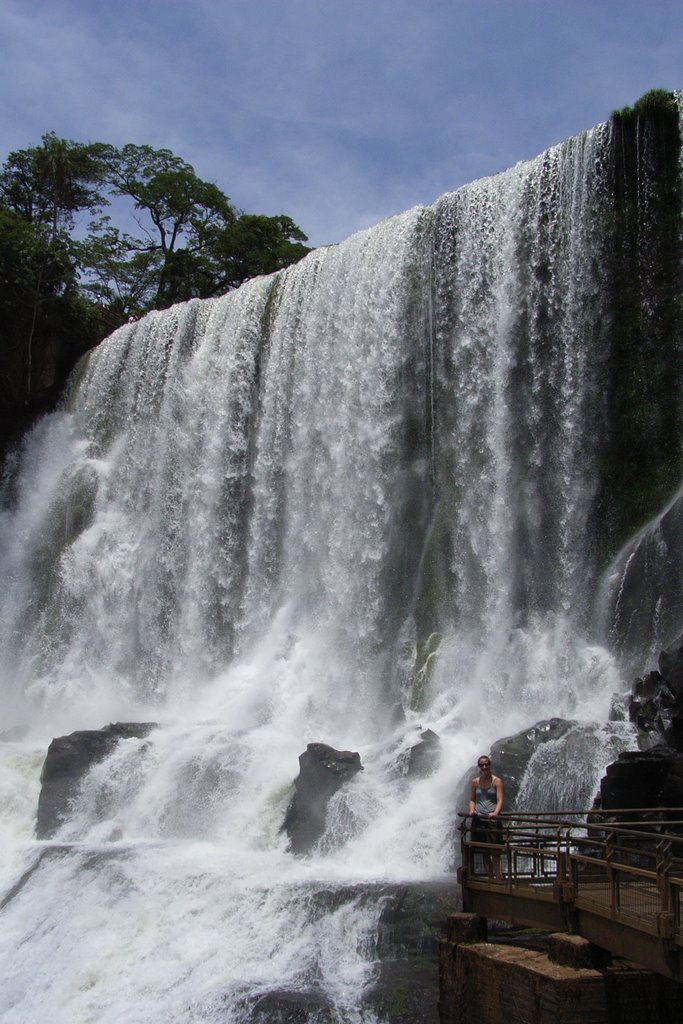
The final stage of our journey took us from Buenos Aries north to Iguazu Falls which sits on the border of Argentina and Brazil. There is much debate over whether the falls are best seen from the Argentinean or Brazilian side.... We had a day on both and think that if you have the time you probably appreciate them most if you can do both.Iguazu Falls from the Argentinian side.......
The Iguazu Falls, while failing to top other falls around the world in terms of volume or height, are undoubtly beautiful. They stretch for 2.7km and are a collection of hundreds of waterfalls, rather than 1 big waterfall.
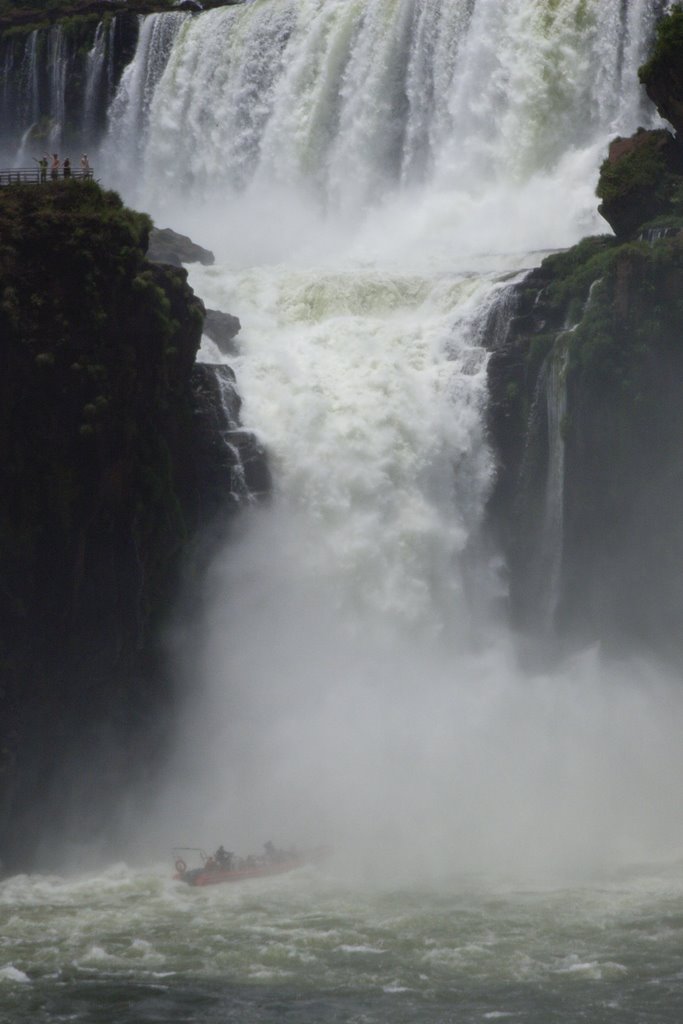
A day on the Argentinian side allows you to get up close to the many falls - walking above, under, around and between the different falls. While there are many tourists around, the vast number of tracks which weave through the National Park mean that it never feels overly crowded.While there we went on one of the boat trips to see the falls from the water. Probably the best bit of this trip was when the driver took us right into one of the falls!!! We got absolutely saturated, but this was a welcome respite from the temperatures in the high 30's, and high humidity.
We found that a day here was easily filled with walking, swimming and absorbing the the beauty and power of the falls. A bonus was the wildlife,which far exceeded that which we saw in the Peruvian jungle - butterflies, Cayman crocs, coates (like racoon things....), lizards and birds.
Iguazu Falls from the Brazilian side......
Our next day was spent viewing the falls from the Brazilian side. The Iguazu Falls experience on the Brazilian side complements time spent on the Argentinian side well, as it offers panoramic views of the falls and allows you to see them in their entireity. Unfortunately, there is only one path on the Brazilian side, and therefore its numerous viewing platforms were at times fairly overrun with other photo-hungry tourists.
We again took our time here and were happy to stand and take in the enormous power and volume or water pouring over the falls - suffice to say it leaves Huka Falls looking somewhat modest by comparison!
Temperatures were again close to 40 'C, but the less interactive nature of the Brazilian side of the falls meant that we had to settle for spray drift from the falls to cool us off.
Flocks of Brazilian Birds
At the entrance to the Brazilian national park is a private bird park. The park is a good way to spend the rest of a day on the Brazilian side (which, if you have done the Argentinian side, does not warrant another full day). The bird park was pretty cool - lots of very large enclosures which you could walk through and view and interact with birds.
The star of the show there were the Tucans, which were extremely bold and happy to fly right up to you for a closer look. Very cool to see a Tucan so close - even if it wasn't exactly in the wild!
Into the heart of the Bahia region......
From Iguazu we flew north to the city of Salvador - in the heart of the Bahia region. Salvador is about a 2 hour flight north of Rio. For us, the journey here took a combination of 4 flights on GOL..... the Brazilian airline which was involved in an accident (total loss) around the time we started our trip in South America. This was a fact hard to put out of our mind during each takeoff and landing... and while they do boast one of the newest fleets in South America...... this was little comfort as their plane that crashed was on its maiden commercial flight!
We arrived in Salvador at around midnight on a Sunday evening. We had arranged for a transfer to our hotel, which was in the heart of the historic part of the city. We wound down narrow cobbled streets and happened upon a crowd of young Brazilians spilling out of a local bar all over the street.... things looked a bit out of control.... and we were highly taken aback when our driver stopped to let us (the only white people for miles) out to walk the rest of the way to our hotel! It turned out fine but was a big culture shock for us..... it felt like we had arrived in an African city.... quite different from the very european Argentina which we had become accustomed to!
We only had one day in Salvador, but it proved to be a real highlight, and in hindsight a couple more days there would have been nice. It had amazing characther - due mainly to the history of slave trade here, which has left a rich African culture in amongst often near deralict colonial buildings. It is not uncommon to hear the sound of bongo drums coming from a house as you walk down the street and artists are scattered around the city painting street and beach scenes as you walk by.
We just spent the day wandering and enjoying the city - stumbling on cool little cafes, bars and other interesting spots as we went. It is along way to go - but if you have the time - it is an interesting spot to spend some time.... perhaps en-route to some of Brazil's best beaches, which we were told were further to the north.

Morro de Sao Paulo
We left the sights and sounds of Salvador and took a ferry to a small island 2 hours away - Morro de Sao Paulo. We didn't know quite what to expect here, as english speakers seemed few and far between. We had been trying to book accommodation and 'Neide', the person we had been dealing with had been sending all sorts of strange emails.... including one which seemed to ask us if we could buy her some perfume..... understandibly, we were a little unsure what we were getting ourselves into!
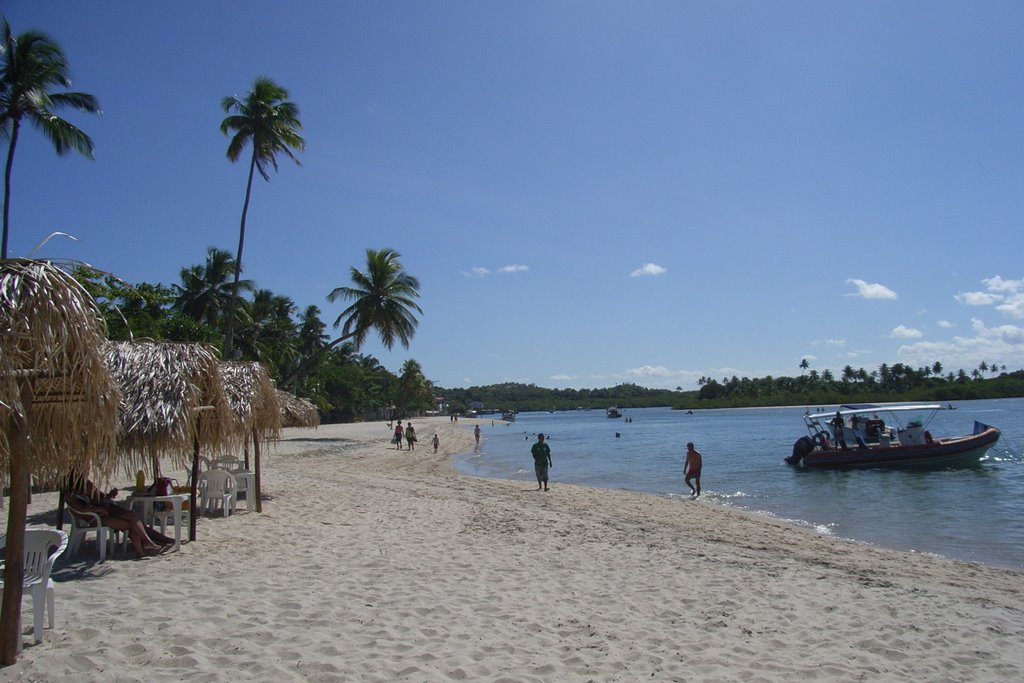
Upon arrival we discovered that the main means of transport on the island are wheel barrows... and locals will happily carry your bags in their 'taxi' in return for a bit of money. Our bags were pushed for about 15 minutes over two beaches to a waiting bus, which took us another 20 minutes down the island to the 4th beach and Hotel Praia do Encanto (http://www.praiadoencanto.com.br/) where we were staying.
It didn't take long after arriving to discover two things about Neide.... 1, she was a woman (we had envisaged a man) and 2, she didn't speak a word of english, rather had been typing english emails using a Portuguese/English dictionary! Her emails to us must have taken hours - and the many miscommunications we had experienced made far more sense!!
The 6 days that followed on the island were fantastic. We had expected the beaches to be the stand out feature of our time here, but in fact it was the people that we met there which made our stay so enjoyable. The staff and other guests (predominantly Brazilian) were so open and welcoming. We quickly formed a great friendship with Neide - who took it upon herself to give us a crash course in Portuguese! The other staff were also very friendly and on numerous occassions the guitars, tamborines and shakers would come out and Michelle and I would be treated to a spontaneous sing along amongst the staff and their friends and family. Musical instruments were so common, that one night when I went to the bar to order a drink I was instead handed a tamborine - only in Brazil!
We also were helped along by Julia, a 14 year old niece of one of the staff, and the only person around who could speak english! She was a very sweet girl and her help is just another of the many examples of friendship that was extended to us.
Our days here were spent lazing by the pool with a book and a caipirinha, swimming and wandering along the beaches. The weather was stunning - and we hardly saw a cloud the entire time we were there. Caipirinhas are Brazil's national drink and are basically cachaca (a spirit made from sugar cane), sugar and lime juice. Definately not for the faint hearted - but I was treated to a course on how to make one by the bar staff.... so watchout next time we have a cocktail party!!!
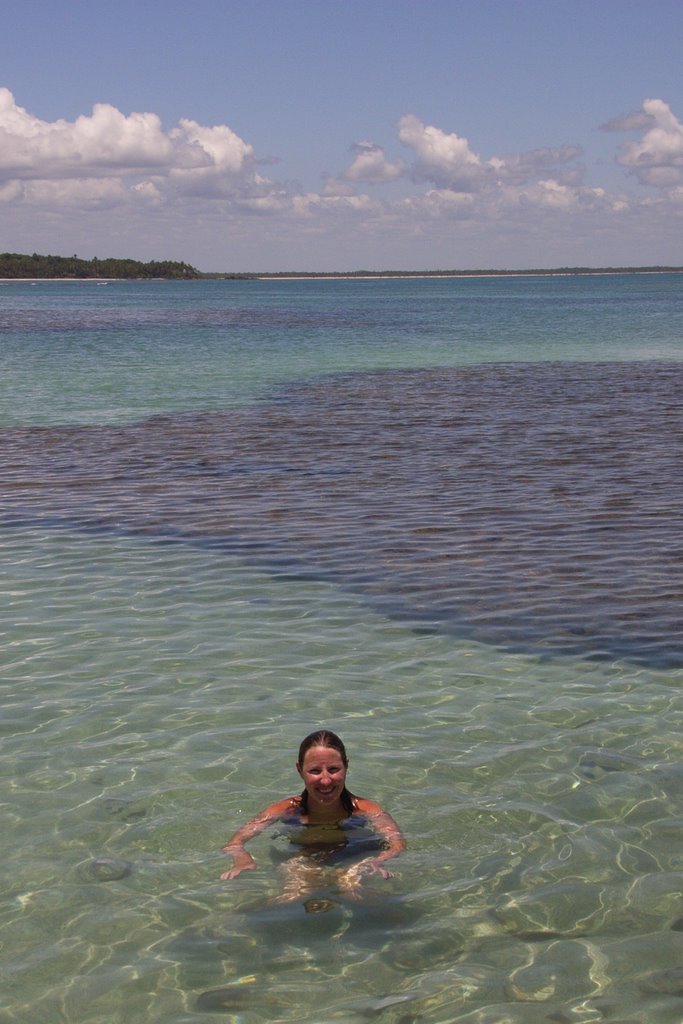
One day we took a day off our usual routine of lazing by the pool and took a day trip around the island. We started out with some snorkelling in the crystal clear water and then headed on to a beautiful beach for some lunch. Neide had recommended a spot to us and we were treated to fresh grilled prawns..... yum! From here we carried on and stopped at an oyster farm in the middle of an estary..... we jumped onto a floating platform and were then treated to fresh oysters straight from the water....... gold! The boat continued around the island and it was a great chance to see some of the other beaches around (which were nicer to those near to us).
We were very lucky to receive such special treatment at our hotel and saying goodbye to everyone when our time was up was a bit sad...... Neide even told us she loved us as we hugged goodbye!! So cute.
Rio de Janerio
From Salvador we flew back south to Rio where we arrived on Christmas Eve. We were staying close to Copacabana Beach for 2 days so weren't too far from all the action.
Christmas Day was spent sightseeing. We went for walk along Copacabana Beach which was packed full of Brazilian beachgoers. The costume of choice was bikinis for the girls and hot pant budgie smugglers for the guys. No matter what shape the bodies were in there was plenty of flesh on display! The beach itself was huge, nice, but very busy.
Next we headed by gondola up the Sugar Loaf. These are huge stone pinnacles that provide a great panoramic view of Rio. Not much more to say really.... a picture can explain it better than we can!
The next day we headed up to see the famous Christ the Redeemer statue. The statue is of course a real landmark in Rio and there were thousands of people up there taking a look. Something that must be done while in Rio.... and worth a look.
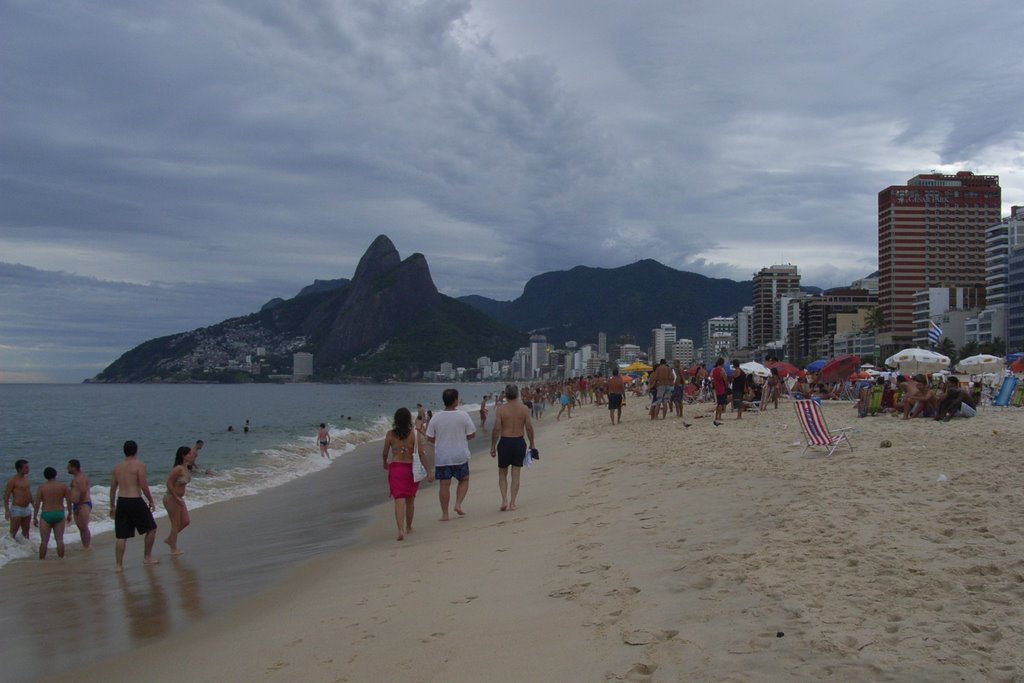
The afternoon was spent wandering down Ipanema Beach, the next bay round from us, and the more 'happening' place to be. The beach is divided into sections.... amongst the informal splits are the sporty section where people play different games and sports, the young section where teenagers hangout and a gay section which was absolutely packed full of budgie smuggling guys.
Rio was a beautiful city, however my perception of it is a bit tainted by its reputation for crime. Everyone we spoke to (locals and other tourists) warned us to be careful with belongings.... the beaches are not safe after dusk and even during the day you are told only to take your towel and swimsuit.... anything else is fair game. Sadly, there seems to be an acceptance that this is the way it is, but to my mind there is no point having a beautiful city and beaches if you can't relax and enjoy it.
Ilhe Grande..... an island paradise?
From Rio we headed to Ilhe Grande. We got off to a bad start.... I dropped the camera and it ceased to function.... our transfer didn't turn up..... and when we did get to our accommodation they gave us a twin room rather than a double.... However, once settled in we got back to relaxing!
Ilhe Grande is billed as a bit of an island paradise away from Rio - upon arriving by boat we were reminded of the Malborough Sounds..... dense bush covered island with little hostels etc scattered around the coast.
We only had 2 nights here, as all the accommodation was then moving onto '5 day New Year' packages. The island was nice (and had some beautiful beaches which could be accessed by boat), however we probably didn't see it at its best.... it was filling up for New Year and we had our first rain affected days in Brazil! We did a bit of kyacking, more relaxing and enjoyed fantastic food at the restaurant of Sagu Mini Resort where we stayed. For me, Morro de Sao Paulo was the pick of the islands.... but nevertheless we had a good time on Ilhe Grande.
Paraty and on to Sao Paulo
From Ilhe Grande we found our way back to the mainland and then a few hours south to Paraty... a colonial town on the mainland coast. This was basically an overnight stop-off on the way to Sao Paulo where our flight to London departed. Once there we really only had time to wander down to one of the local beaches and then look around the town. It was a nice town with cobble stone paths and the shopping here looked pretty good (although we had run out of money by this stage!). The sort of place we could have spent a few more days, but alas the next morning we boarded the bus for Sao Paulo.
The bus trip to Sao Paulo was a bit surreal..... thousands of Brazilians heading out of Sao Paulo for the beaches meant that traffic was crawling, but everyone was in good spirits - dressed in their beach gear, music playing, drinking etc..... felt like New Years Eve in the Coromandel - and there a hint of 'I wish I was in NZ for New Years' sentiment around!
We arrived in Sao Paulo..... a city of over 10 million people and one which is dirty and in parts dangerous. We were staying in the Chinatown part of the city... one of the safer bits... and home to great cheap eats. We basically killed time here until the moment finally arrived for us to head to the airport for the last time on the trip........
We'll try and do some overall reflections of the trip, but on Brazil some of our reflections were that it was worth a visit... but that due to its size you can only scrap the surface in 2 weeks, it is diverse in both its people and landscapes, we were a little underwhelmed by the beaches (I'll take a deserted Coromandel beach anyday) but were over whelmed by the many friendly open people we met in the north. For us, it was a great country to finish the adventure in - as the beaches and culture means that to sit back and relax is very easy.
Thursday, December 14, 2006
We`re in heaven.......(updated with pics!)
We´re in heaven (more commonly referred to as Argentina)! Apologies for the gap since we last wrote - not sure why it has taken so long.... our only explanation is that we have been too busy enjoying the good life to take time out to write! As its been over a month there is a fair bit to say... so for those of you who want the summarised version, here are a few of our observations on Argentina:
Cosmopolitan: Argentina is very ´cosmopolitan. Lots of bars, cafes and styley people. It is a mix of beautiful colonial architecture, modern European living and Latin American culture. These things fuse together to make a perfect holiday destination.
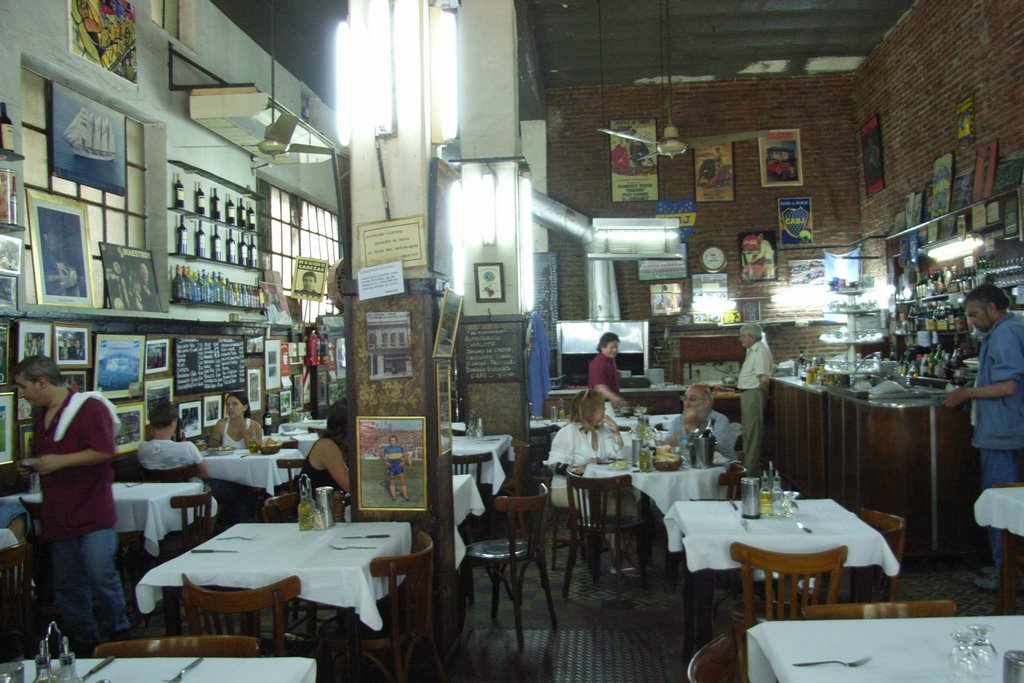
Food: The food is unlike that we have experienced anywhere else in South America. There is a great mix of traditional Argentinean parillas (where they serve beautiful steaks), modern restaurants with beautiful seafood and modern cuisine. (Pic: Lunch in La Boca)Wine: The red wine is superb..... especially for the price.... We have been careful in our research on this front, and have left no stone unturned when it comes to experiencing this aspect of Argentina. Wine is so important here that in many restaurants the length of the wine list far exceeds that of the menu. We like it.
Affordable: For anyone shopping with a foreign currency (even the NZ dollar!), Argentina is very affordable. A bottle of quite drinkable red can be purchased at a restaurant for 12 pesos (that's about NZ$5). A whole meal for 2 in a nice restaurant (including a very nice bottle of wine) can cost as little as $NZ50. The cost of food etc seems to be around half what you would pay in NZ (or less when it comes to wine). You can live extremely cheaply, or, you can do what we seem to.... and spend almost what you would in NZ and eat and drink like royalty!
People: The people here are extremely attractive. As we are a happily married couple, there is probably not more we can say here.Climate: The weather has been fantastic. We´ve had sun everyday and temperatures have ranged from very mild (15-25°C) to very hot (30-35°C). Not looking forward to the London winter!
Lifestyle: The lifestyle here is very much one of eat late, stay out late and if you live outside Buenos Aries, have a siesta in the afternoon. Some clubs don´t open until midnight, and most people turn up around 2am and stay until daylight. I am now sure that Sanjay is Argentinean.
White is black: Argentineans love to wear white. This is especially so for the women, however is also apparrent with men.... yet further proof that Sanjay is part Argentinean.
For those of you who are suckers for punishment.... here is the full uncensored version......
Salta
Last time we wrote we had just arrived in Salta, a small city in the far north of Argentina. For us Salta was a European oasis after months spent in ´South America´. It is a beautiful city, with plenty of great colonial buildings. It is not ´touristy´, however its population combined with tourists (South American and foreign) ensures that there are no shortage of cafes, bars and restaurants. Its fair to say that our week here was very relaxed.... sipping, shopping, eating and relaxing.
The pace of life here was fairly peaceful compared to other Latin American cities and the tradition of a ´siesta´ is alive and well. For us the siesta took a bit of getting used to. For the first couple of days we would enjoy a sleep in and get out and about around 11am, only to find most shops and other businesses would close up at 12 and not reopen until 4:30 or 5pm. Fortunately cafes do not have the benefil of the seista, and so we could hunker down in one until life emerged post-siesta!Salta also has no shortage of stray dogs. One evening while sitting at a restaurant table in the street one sat with us in one of our spare chairs. The repeated attempts of restaurant staff to eject him did not seem to phase him and since we had been subject to such attempts by bar staff in our past we felt a real connection with him. This began our relationship with Baxter. He followed us to our taxi that night, joined us in a park one day (until we all got kicked off the grass) and also found us at another bar where he sat and enjoyed a drink with us. We really bonded with Baxter and he joins the long list of great people (and now animals) we have crossed paths with on the trip. (Above, Baxter, our furry gentleman friend)
Cafayate - the home of Torrontes
From Salta we began our trip south to Mendoza. As we were going overland by bus and it is a long way, we decided to break up the trip with a couple of stops. What better place to take a break than Cafayate... a small town in the north which is home to ´torrontes´ a white wine variety which we understand is pretty much only grown in Argentina. Its hard to describe... but is very floral and not too bad on a hot Argentinean day.
Cafayate was very quiet...... with only the odd tourist on bikes to spoil the peace. Feeling guilty after not doing any sightseeing in Salta we packed our day here full of activities. First things first, we hired bikes and took to the road in search of wineries. We visited Etchart (one of the biggest producers in the area) and had a tour of the winery. Like all our winery tours here, we were shown right through the winery, as workers lined the bottling line and forklifts wizzed past with pellets of wine...... it seems Argentina is free of OSH restrictions still! We were also pleasantly surprised to find that their award wining ´top of the line´ red wine sold for just 40 pesos (that´s about NZ20!). Two more wineries and then a peddle back to town.
In the afternoon we took a tour of an area of valleys just out of Cafayate called Quebrada de Cafayate. Here the rock formations have eroded over time to reveal layers of different colours and unusual shapes. Although we were in two minds about whether to do this trip, we did actually enjoy it). Our ´guide´ was hopeless (basically just drove the group around and flirted with two Argentinean girls) but did come into his own in one cave called ´The Ampitheatre´ when he picked up a guitar and sung while a thunder storm broke out. Pretty cool to hear the booming thunder mixed with this guy´s tunes.From Cafayate we bused to Tucuman another city en-route to Mendoza (again a stop to break up the trip). Not much to say about Tucuman, except that it was hot and was where the abundance of stylish dressers became more apparent to us. After a day and night here we hopped on a night bus to Mendoza.
Mendoza - a desert full of Malbec
Mendoza is a small city (130,000 pop) tucked in by the Andes (to the east of Santiago). The news to us was that it is in the middle of the desert, but to look at it you wouldn´t know it - the streets are lined with lush trees and like all Argentinean cities, there are plenty of lush green plazas scattered around the city. This is all made possible by open air aqueducts (used even prior to Spanish settlement) that irrigate the city thanks to melting snow in the Andes. This is the same water that makes it possible for the grapes which produce 70% of Argentina´s wine to be grown in this desert which surrounds Mendoza. It is fair to say that the week we had here had a strong focus on wine. However, when in Rome right?
Our accommodation here was very nice.... an apartment with a big deck from which to enjoy the hot sunny days (average high here in December is 30°C). Not exactly backpacking.... but to be honest.... although we each have two backpacks, I´m not sure I would say we have been backpacking.
In an attempt to ease into the wine experience we took ourselves by local bus to the nearest wine region (there are 3 main regions), the Maipu valley. Here we again took to the roads on bikes and visited a few of the local wineries.... good times, but you wouldn´t want to get too carried away as the roads are narrow, the trucks on them are large and fast, and the dogs that chase you are less than friendly (nothing like Baxter). Most interesting thing learnt that day was that if a winery does not irrigate using a drip feed system (ie black piping) they simply open the aqueduct gates into the vineyard when required and flood the areas planted with vines. Apparrently this is the traditional way. (Pic is flooding of winery)Not having satisfied our cravings (and with our bums not up to further biking) we booked the next day for a full day ´premium´ tour of Valle de Uco, to the south of Mendoza. This region has great scenery as it is surrounded by vines and has the snow capped Andes as its backdrop. It is also emerging as the most prestigious Mendoza region as the elements here produce a great wine.
Guided by Anna, a recent law school graduate, we visited 3 wineries over the course of the day, each of which was very different. Our first stop was La Azul, a small winery owned by 2 Argentinean businessmen. The winery is a hobby for them and produces just 30,000L per year. Our tasting here was carried out in the room where the vats are housed and barrels stored - basically the only building on site. Here we tasted 3 wines, two of which we sampled straight from the barrel...... noticing how experienced Michelle was with a glass of wine in hand the guide at the winery even allowed her to pour her own glasses from the barrel! Included in our tasting from the barrel was their top wine, of which from the last vintage only 600 bottles reached the market (all of which sold to a single buyer for 80 pesos each .... NZ$40). The tasting was unlike any other we had experienced in NZ - even the wine glasses were large fine glasses of the type you would expect at a nice restaurant (with large tastings to match....).From here we went on to Andeluna, a much grander and very new winery, which sells only domestically and in some states in the US. Demand far exceeds supply for them, and thus prices for their wine started at around US$30 per bottle.... quite a contrast to La Azul! We were again shown the vineyard and right through the winery and so in addition to tasting, you also learned a lot about how different wineries produce their wines.
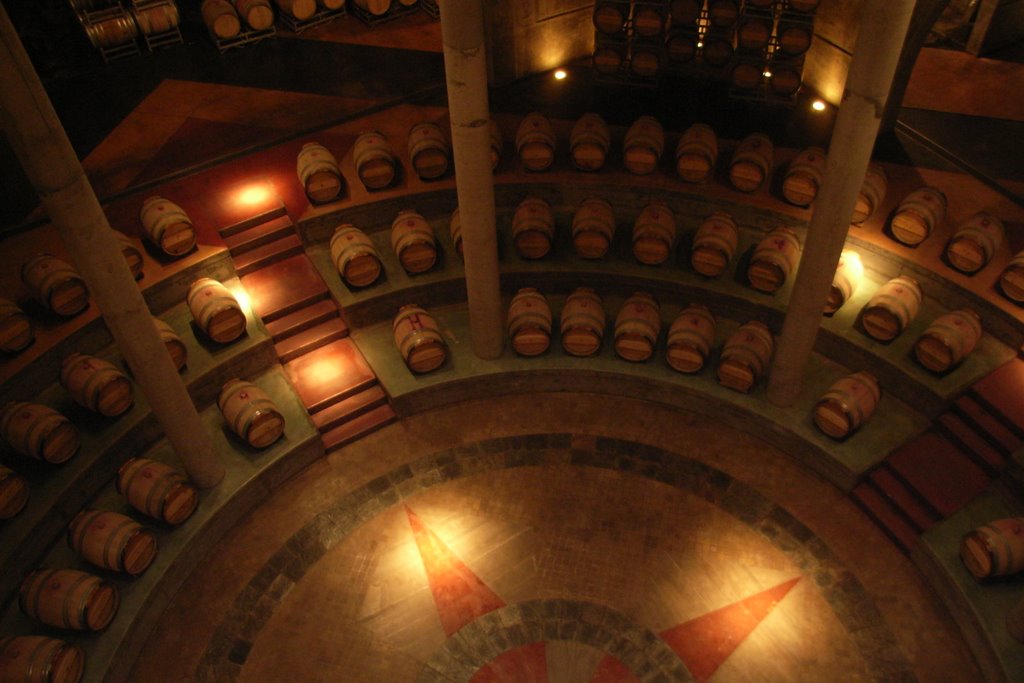
Next on to Salentien, probably the largest in the area and owned by a Dutch businessman who has spent a fortune on the winery. The winery, with a star shaped interior is quite an architectural feat (see view from level 1 into barrel room to the right)! We had a great 3 course lunch here followed by tasting. Like Andeluna, the winery buildings are very new - apparently a lot of foreign money has poured into the industry since the 2001 crisis made investment here so much more affordable (until then the peso had been pegged 1 for 1 to the USD). It was a great day and we learned (and tasted) a heap!It was in Mendoza where we had our biggest ´it´s a small world´ experience so far in the trip. While at a wine tasting in town, we bumped into one of the only 2 people we knew in Argentina prior to the trip (only we thought they were in Buenos Aries). Luke and Suzie (who we had met only once or twice through Dazza) had done a trip like ours to South America 4 years ago. Like us, they vowed to come back and earlier this year they did and now work in Mendoza. This was a great chance encounter and Luke and Suzie really looked after us for the rest of our time there.
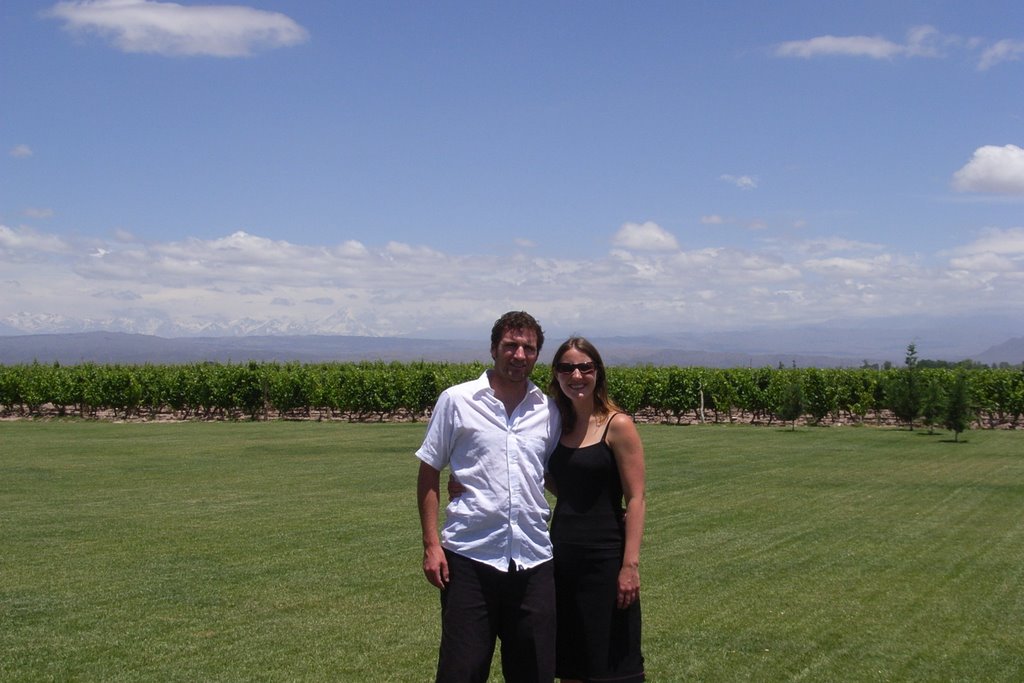
As it happened, Suzie was working as a wine tour guide, so the next day we found ourselves booking onto our second `premium´ tour, this time of the third region, Lujan de Cuyo. With Suzie as our guide and Luke along (he was writing an article on the tour) we had another fantastic day. I have raved on enough about wine tours and tastings, but in short.... we did another barrel tasting, visited one of the oldest wineries in the area and had a beautiful 5 course wine matched lunch. Another fantastic day and we left knowing a little bit more about wine and how it is made here. (Pic, us with Suzie and Luke)Of course there is more to life than wine. When we weren´t drinking, we were eating, but when these things were done we also spent plenty of time exploring the area and experiencing the culture. In addition to its tree lined streets and plazas, Mendoza has a 400 hectare park (Parque General San Martin). The park is home to a man made lake, used to irrigate the city and is positioned in the direction of the prevailing wind to add humidity to the otherwise dry desert air. quite clever really. The cultural highlight was sitting a terrace cafe outside the Hyatt, which is a huge old colonial style building, listing to jazz by moonlight.
All in all Mendoza was a fantastic place.... we will be back!
Santiago - Chile
We took a bus for the 6 hour journey across the Andes and into Chile.
We had been told to expect spectacular views and scenery along the way, and while it was quite impressive, we have probably become a bit spoilt in this respect from the scenery we have seen further north on the trip.We had 3 days in Santiago.... this time in accommodation that would be fit for a true backpacker, but which was central in its location. Santiago was a busy, bustling city. Once again there are beautiful plazas, parks and colonial buildings. It has a great underground rail system and we quickly found ourselves using this to get around the city and region.
The highlights for us while here were probably a gondola ride up to a park that overlooks the city. From the top there is a great panoramic view across Santiago. There is also a huge Christ the Redeemer statue at the top which overlooks the city. Open air church services are held at the top, which I am sure would be an amazing experience to attend.
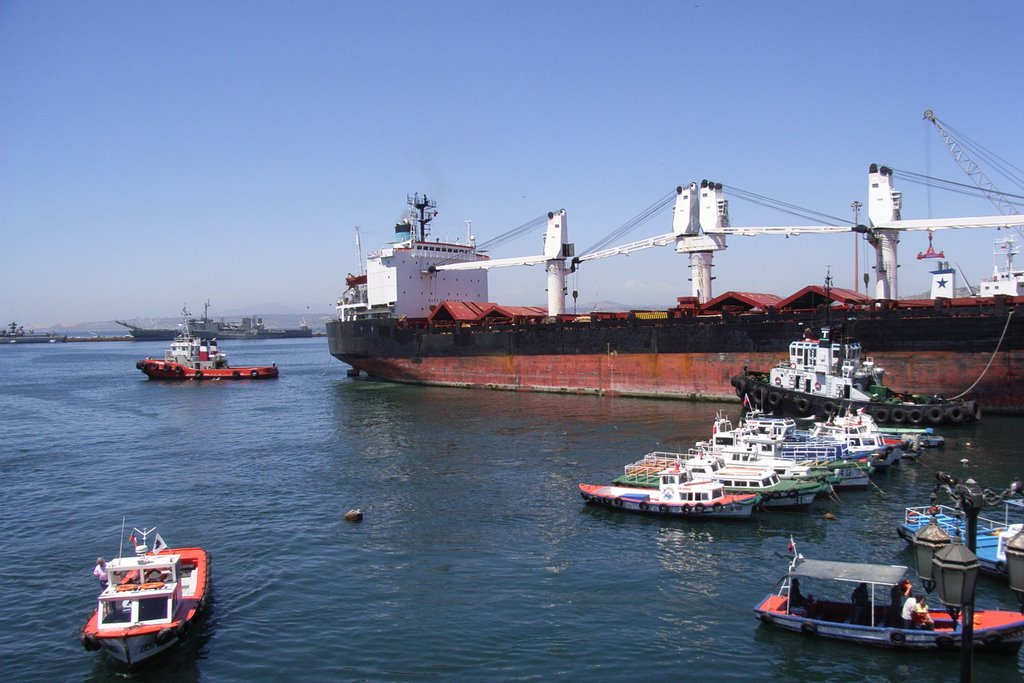
We enjoyed a day trip out to the coastal port town of Valparaiso. The unexpected highlight here was a trip to Pablo Neruda`s hillside house (he is a Noble prize winning poet.... but we had never heard of him.... sorry mum....). It seems that the guy was fairly eccentric and his house is filled with odd bits and pieces, each with a great story. For example, he was given a portrait of a woman which hung on his wall..... and so as to ensure that she didn´t get lonely, he purchased a portrait of a man and hung it on the wall opposite! He also enjoyed things nautical and his home overlooked the busy Valparaiso port. A cool little town to visit. (pic, view from lunch)The only downside to Chile is that it is relatively expensive. We found that things cost about the same or a little more than they do in NZ..... a bit tough on the wallet after weeks travelling in Bolivia and then Argentina!
Roll on Buenos Aires.......
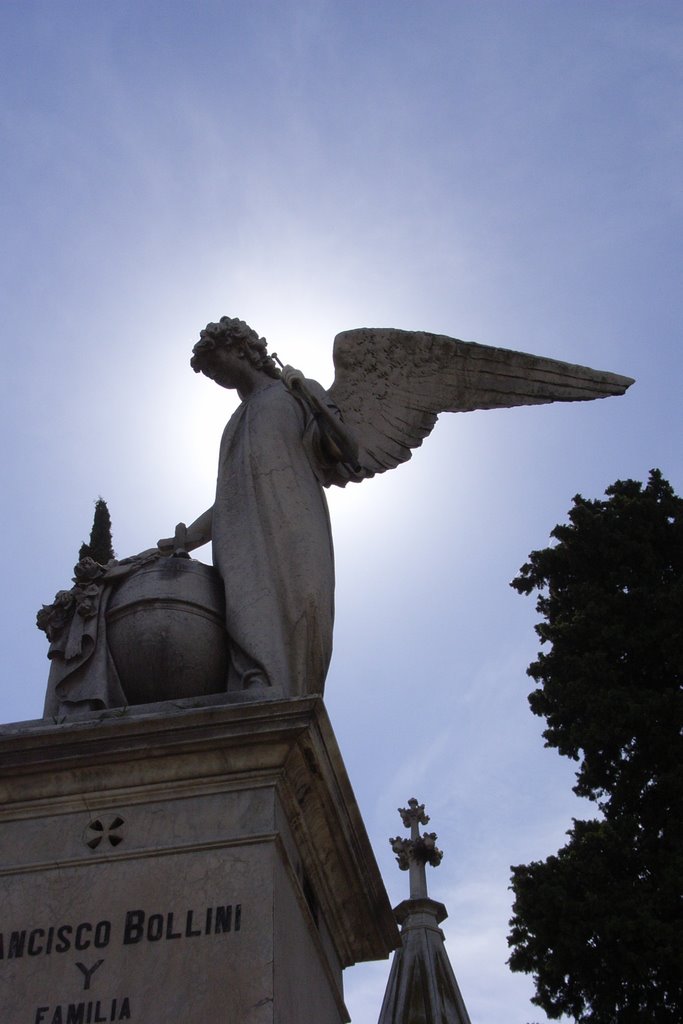
Our flight from Santiago to Buenos Aires provided us with a fantastic view of the Andes. I don´t think we had appreciated how immense they were until we saw them from the air!In Buenos Aires we checked into our home for the next week... a small B&B in the heart of Palermo (www.palermoviejobb.com). Our stay there has been fantastic. Ariel the owner was quick to sit us down and talk us through the city and what we needed to see. Armed with a map he gave us (which incidentially points out the location of gay friendly businesses all over BA..... in Ariel´s words, the map is gay, but its good!) we have really experienced Buenos Aries. (Pic is Ricoletta cemetary)
Highlights have been :
Living in Palermo...... Palermo is the heart of the Buenos Aries cafe, restaurant and designer clothing store area. Every street is a mix of residential buildings and places to eat, drink and shop. Naturally it is a place Michelle could easily get lost in for weeks! It has all been on our doorstep, which is dangerous, but great!
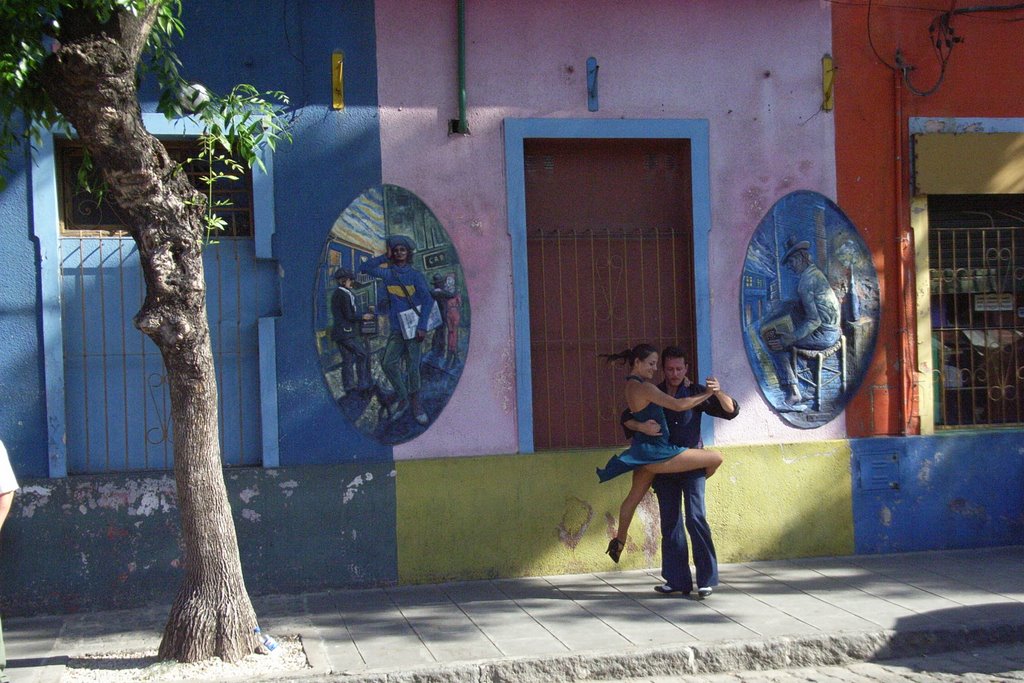
Tango in La Boca..... We spent a day looking around La Boca.... a working class neighbourhood and home to Maradona Diego´s football club and tango. Despite the Lonely Planet´s warnings not to leave ´tourist areas´, we ventured down back streets (complete with piles of rotting rubbish everywhere you looked) in search of a local restaurant Ariel had recommended we visit. Sure enough we found it nestled amongst industrial buildings..... it had been around for about 60 years, was very local and the food was stunning (and cheap!) and the wine list extensive. From here we ventured into the tourist area and watched tango in the street, and back out of the tourist area, a local rock band play to locals on a soccer pitch.Ricoletta cemetery.... Nestled near the city is the historic Ricoletta cemetery... Evita`s resting place. Although one must go to see Evita´s grave, the cemetery is more spectacular for the mix of grand crypts, some of which have been lovingly cared for over the past 120 years, others which are in a sad state of disrepair.
Sunday in San Telmo..... Sunday in San Telmo the streets convert to a massive antique (and other old stuff) market. You could spend (and we did) hours here looking at all sorts of stuff.... matchbox toys from your childhood (remember the light blue car transporter Scott?), tonnes of coloured glassware from the 60s (had to drag ourselves away) and several deco stores where Bruce and Alan would be in their element!
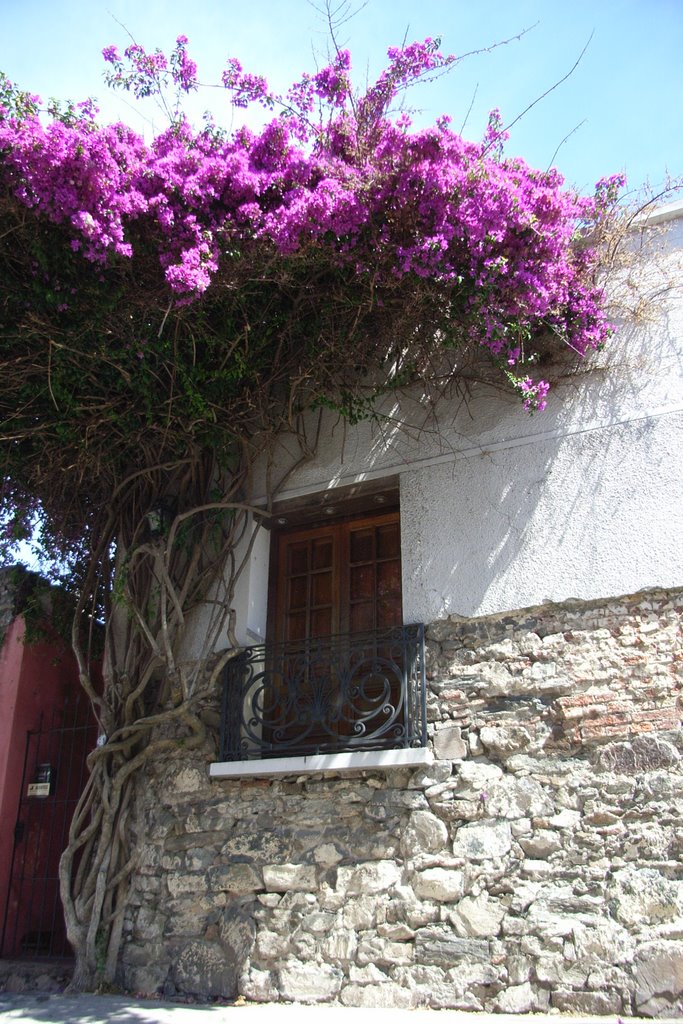
Uruguay.... We took a 1 hour ferry across the river to Colonia, a small town in Uruguay. The city is a world heritage site and has extremely rustic cobble-stoned streets and stone houses. It is like we would picture an old Italian or Spanish village and was a nice peaceful break from bustling BA.
Of course we have done heaps more here.... enjoyed fantastic food and wine, shopped, visited galleries, parks and plazas, late nights out in dance clubs (complete with g-string clad dancing girls, drag queens and freestyle (ie BOP) dancers), wandered through markets, weaved around the city on local buses and just tried to absorb as much of this great city as we can.
As you can see - we love Argentina and we are already planning a return journey here. From here we head to Iguazu falls, then on to Brazil for a couple of weeks mainly spent on beaches. Will try and let you know about that before we leave South America.
Hope this finds you well. Don`t get too carried away in the silly season, have a great Christmas and New Year. We have Christmas in Rio and New Year in the air en-route to London where we arrive on New Years Day.
Saturday, November 18, 2006
Where we have been so far.......
In the meantime, here is a map of where we have been on tours so far in South America.
After the San Fran we flew to Quito in Ecuador, and then from Quito to the Galapagos Islands to do the following trip over 8 days........
After that we joined a Tucan tour for 36 days in Quito and did the trip below ending in La Paz, Bolivia.......
And after that we joined a GAP tour, a map of which is below. Note that rather than looping back to La Paz on this tour, we got off when we where in the south near the Salt Lakes. This was so that we could drop down into the north of Argentina.

Hope this helps (and if anyone can tell me an easy way to map the rest of our trip through Argentina and Brazil, I´d love to hear it!).
Friday, November 17, 2006
Death road, Dynamite and Deserts
Hard to believe almost 3 weeks have passed since our last post. We have been having a fantastic time, in fact, we´ve experienced some of the real highlights of the trip so far since we last wrote.
Crazy Cusco

Last time you heard from us we were in Cusco. It was a beautiful city, although probably the most ´touristy´ city so far. Our time here was spent chilling out after the Inca trail, and as a result we didn´t see too many of the sights.
Probably the highlight of our time in Cusco was a party we went to. Our tour leader knew the owner of one of Cusco´s bars/restaurants called ´The Fallen Angel´. It is an amazing place and worth a visit if you are in Cusco, not only for the food/drink, but the interior decorating. I think the owner has a resident artist and even the toilets feature elaborate decoration (barbed wire etc). Anyway.... the owner, Andreas, was throwing a party for his boyfriend´s birthday, and we were able to go along. The theme was around movies, and you couldn´t get in unless in theme. At about 4 on the day we set off in search of costumes, and by 9 (with the help of some material, scissors and Tony from our tour) we had turned ourselves into Fred and Wilma. The party was crazy. There were two DJs from the UK there and everyone danced in the rain in an open air courtyard. Andreas enjoyed dress up, a lot, first dancing on the stage in a sailor´s outfit (albeit one with white lycra hotpants and an open fronted lycra top). Later he changed into thigh high black boots and black hotpants as he walked around pouring tequila from the bottle down peoples´ throats. Some of the costumes were amazing, one guy/girl had Nemo (from Finding Nemo) on his head and although it is hard to describe, looked awesome. Good times.... but a quiet day the next day!
Lake Titicaca - Reed boats and homestays......
After Cusco, we headed south to Puno, which is a bit of a hole on the edge of Lake Titicaca. From here we started a 2 day trip on the lake, which is the highest navigable lake in the world. We weren´t sure what to expect of the trip, as others we know have been less than impressed with aspects of the lake, but we loved it.
First stop was the famous reed islands. Built from reed, the islands float out in the lake and are home to local natives, who live in huts built from reed. Tourism is a key part of life for the island´s inhabitants, but the ones we met were extremely welcoming, friendly and genuine. We met a young family, a 16 year old girl with young husband and small child. Although their way of life is the reason tourists visit, it didn´t detract from the fact that these people actually still live on the floating islands in the way they always have. Having said this, there is a strange mix of old with new.... the children travel to Puno for school, the islands have solar panels for power and an eco friendly toilet to prevent pollution.After this, we motored for a few hours to one of the lake´s large islands. Here our group was billeted out to local families for the night. Fair to say that I was dreading this part of the trip, but it turned out fine. Michelle and I stayed with a young solo mum, who had a very cute daughter. Everything was very basic, but we were well looked after. There was plenty of interaction with locals including a soccer game (us vs them..... although given the altitude they had a distinct advantage) and a dance (were we wore local dress.... no you will not see the photos!). Once again, interesting to see first hand how the people here live and not the lowlight of the trip that I was expecting!
On the way back to Puno we stopped in the middle of the lake for a swim. Michelle and I led the charge into the water.... which was freezing! Suffice to say we didn´t stay in long!
Into Bolivia......
Next we bussed further south and across the border into Bolivia and then onto the main city, La Paz. The border crossing was again relatively painless and fairly informal... no ´do you have anything to declare´ type formalities here.
La Paz was a very interesting city with huge contrasts. Obvious wealth (Gucci shops etc in some areas) and obvious poverty (old men relieving themselves on a busy city street). We had about 5 days in La Paz and it marked the end of our 36 day trip with Tucan and the starting point for our next tour. It was sad to say goodbye to the Tucan group.... we had such a fantastic time with them. We had a farewell dinner at a french restaurant (La Comedie). Although this place was extremely flash by Bolivian standards, it was still very cheap. I had a leg of lamb (which was big enough to feed a family) that cost just US$5! A few sneaky mohitos after dinner.... and a very slow day the next day!
Death road......
By far the highlight of our time in La Paz (and one of the highlights on the trip so far) was mountain biking down Bolivia´s infamous ´Death Road´. This road is regarded as one of the most dangerous in the world. It winds along the edge of a river valley, is extremely narrow in parts, has waterfalls flowing on and over it and has an almost vertical drop of around 500m alongside it. Despite this it is heavily used by large trucks and buses and because of this is an adrenaline rush for those tourists who choose to cycle it.
The cycling part of the trip starts at 4,900 metres on a tarseal road. It ends about 60 kms later at 1,200 metres in a jungle town. We started in extremely cold and wet conditions on the tarseal. After about 1 1/2 hrs of mainly downhill riding we reached the start of Death Road. Still raining, but now warmer, we set off. Our guides were very good. We had 3 guides plus two vans with our group of about 16. In the worst parts a van would go ahead and radio back to the group to let us know a truck etc was coming the other way. The 2 hr ride down was awesome. In parts you fly, but always conscious of the possibility of a large vehicle coming the other way on the largely one way dirt road and wary of getting too close to the edge! The drive back out on the road after the cycling was pretty scary, as you are no longer in control of your destiny and our van was much smaller than much of the traffic coming the other way. Fortunately we had right of way and could keep to the right side of the road (the side away from the cliff) when being passed by on coming traffic. The trip is a mix of adrenaline and beautiful scenery. Some question whether doing the trip is in good taste and worth the risk, but we both rate it as a real highlight of the trip so far.
For those interested in Death Road, one of the guys in our group sent us this link to a recent BBC article on the road: http://news.bbc.co.uk/2/hi/programmes/from_our_own_correspondent/6136268.stm
Joining the GAP group
From La Paz we flew to Sucre, the highest capital city in the world (although in some ways La Paz is viewed as the capital too). In contrast to other flights in South America so far, our Bolivian plane was old...... a 727-200 with 3 engines mounted on its rear fin. Like other flights here, the landing is a little disconcerting, as the pilot weaves between mountains and valleys before dropping onto a runway.
At the airport the four of us joining the GAP tour from La Paz met the 7 others already on the GAP tour which had started a couple of weeks earlier in Rio in Brazil. The group was also really good...... a mix of Aussies, Brits and Americans. There was also a Canadian tour leader (Megan) and Vanessa, a Peruvian trainee tour leader.
Sucre was a great place and one where we could have stayed longer (no coincidence that it is also famous for its chocolates!!!). While still having a distinct South American feel, it is very clean, has heaps of old colonial buildings and has a slower pace of life. We did a bit of shopping here (DVDs for about US$1) enjoyed good food and drink. We had one night out...... first and last time in a Bolivian night club.... although as 3 time South American dance champion, Vanessa was a sight to see on the dance floor.
Mining with dynamite
From Sucre we headed to Potosi - the highest city in the world, and home to what was once the most productive silver mine in the world. We did a tour of the mine which was pretty cool. Once decked out in ´miners gears´ we bussed up to the mine. The mine is home to about 20,000 miners, all who work for themselves and sell their produce via small co-ops. The miners have short lives, due to the conditions in which they work (dust, chemicals etc and no protective breathing gear lead to disease) and usually can take only 10-15 years in the mines. First stop was to purchase gifts for the miners we would encounter on our trip........ included in the bag of treats we each purchased were special miners cigarettes, coca leaves and a stick of dynamite, fuse, detonator and bag of ammonium nitrate.... hmmmm. We also tried some of the miner´s tipple..... at 97% alcohol it is like drinking meths (not that we´ve tried meths....).We headed into one of the many small mine shafts, trying not to think too much about how each of the miners know what the other is doing and how (or if) monitoring and identification of weak spots is managed. The shafts were cramped and dark and it was amazing to see how the miners do everything by hand (with assistance from their dynamite!). In the mine we talked about how the miners work and their superstitions, while sharing a miners cigarette.... conscious always of the proximity of our dynamite to the cigarette! Once safely back on the surface the guide demonstrated the detonation of one of our dynamite sticks. The explosive was created in front of us, then lighten in front of us, before being passed to a young miner who ran off with it to a nearby hillside. Once aware of how close the explosive was, our guide politely asked us to move back....... and then a short time later it went off!
Reality TV.....
From Potosi we took a private bus to Uyuni, the gateway to Bolivia´s Salt Flats. The trip there was along a very basic dirt road. Partway there we crossed paths with contestants on a reality TV show. The idea is that 8 Dutch and Flemish couples must hitchhike from Rio to Lima with the slowest being eliminated from time to time, similar to the ´Amazing Race´. They have very little money and must knock on doors to find a bed whereever they end up at about 4pm each day. Two couples got off the local truck they had hitched a ride on and asked to join our (much faster) bus. We convinced the driver to take them.... and they enjoyed the comfort and food that us and our bus could offer them. It was very funny..... in the middle of nowhere in Bolivia with 2 TV cameras and 4 glamorous contestants. Single boys.... this could be a show worth watching, although it will only air in Belgium and Holland.
The Salt Flats
From Uyuni we started a 3 day 4x4 tour of the Salt Flats and Bolivian desert. This was fantastic!! Probably the highlight of the trip (so far).The Salt Flats are a vast area of salt (funnily enough) and are unlike any other place we have ever seen. Everywhere you look is a brilliant white, with hills on the horizon. In the middle is ´Fish Island´, also known as Cactus Island (yes... due to the many cacti there....). We climbed the island which provides 360 degree panoramic views of the Salt Flats. It was breathtaking.
After lunch we went to work on the Salt Flats creating ´surreal photos´. The white backdrop of the Salt Flats means you can create all sorts of illusions with some props and a camera...... we´ll attach some of our work........ Soooooo much fun and the list of things you can do is endless.... would love to do more one day.
From here we drove further south on the Salt Flats and found a spot to watch the sunset over them. More photo opportunities and a last chance to take in the Flats and how much we had enjoyed our time on them.
The next 2 days were spent cruising around rough tracks through the Bolivian desert in our 4x4s (3 Landcruisers). The 4x4s took a hammering, and the drivers were always tinkering with this and that and replacing tyres when we stopped. Good to see the 4x4s doing what they are supposed to, rather than clogging up city streets.
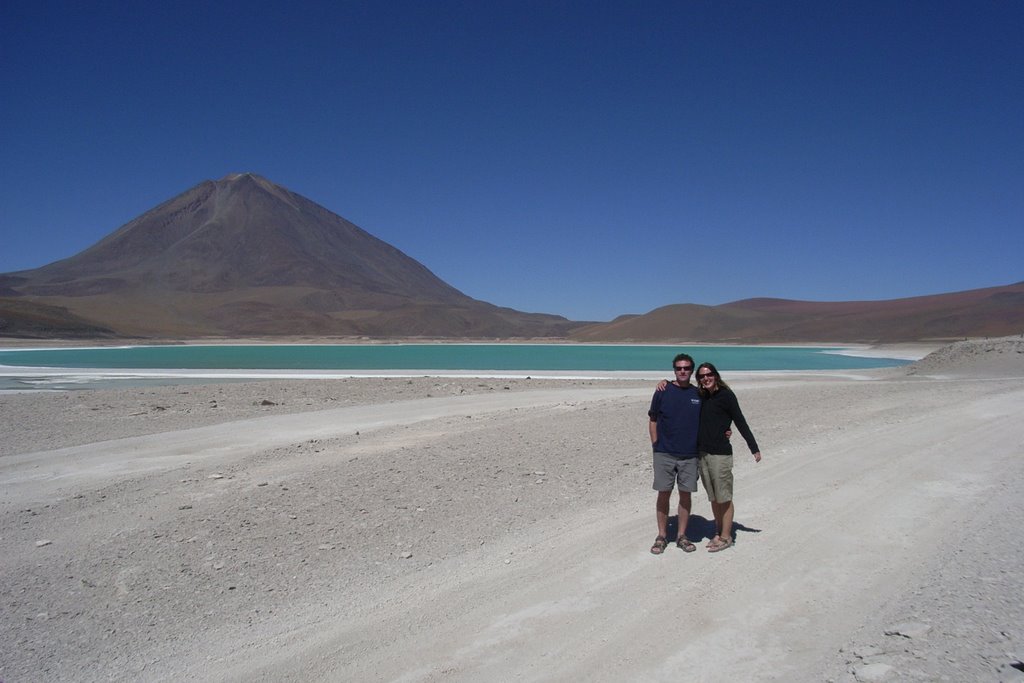
The scenery we saw over the 2 days was also amazing. There are many lagoons, often filled with pink flamingos - in some cases thousands of them. One lagoon was red in colour. Another that really stood out was Lagoona Verde. It is right on the border with Chile, is a brilliant green colour and backs onto a large volcano. It is truely breathtaking, and blew us all away. We were very lucky, in 4 trips our tour leader had never seen it as green as we did. There are also mudpools and geysers, similar to NZ, but without all the barriers and warnings as you walk around them! We soaked in a natural hotpool on the edge of a lagoon early one morning - this was the best hotpool ever.... so nice and very natural, with a rough sandy bottom. There were also small tornados popping up all over the desert - one even hit our 4x4, leaving us spitting sand from our mouths and brushing it from our hair!
These were 3 amazing days..... and it is strange to think that at over 4,000 metres, all of it was spent higher than Mt Cook!
Overall Bolivia has been a top spot and we think that anyone coming to South America should seriously consider coming here. It is very cheap, very beautiful and offers some amazing experiences.
Travelling solo
After the Salt Flats we left our GAP tour and are now travelling on our own. Although the tours were great, we are enjoying now being on our own and the flexibility it offers.
The start of our time without the comfort of a tour leader could have been a baptism of fire... but turned out alright. At 2am we caught a train from Uyuni to the border with Argentina. We could not get tickets for tourist class, so had to settle with the ´local´ carriage. Although we had ´allocated seats´ this meant little and there was much jostling just to get on the train.... for a while we didn´t think we would be allowed on! Once on we sat with all the locals, many of whom were in traditional native dress. As we had been up since 4am the day before much of the night and following day is a bit of a blur, but we recall some stunning scenery as the train plodded along towards the border.
10 hours later, and a couple of hours late, we arrived at Villazon, the border with Argentina. We crossed over and found a connecting bus south to Salta in Argentina. 6 1/2 hours later we arrived in Salta, found a hotel and enjoyed a cold beer and some food. A long day... but satisfying that we managed to get there without incident on our own!
It´s been a long blog entry.... so we´ll save thoughts on Salta and Argentina for next time. We´ll be here for about 5 days before heading south to Mendoza.... wine country!
Thanks for your emails and for reading the blog. We hope you are enjoying it.... we are enjoying sharing our experiences with you. Hoping to find the ABs on TV tomorrow... if we do it will be the 3rd time lucky! Take care, love Ross and Michelle.
Friday, October 27, 2006
3 weeks in Peru
We have been making our way south through Peru after an exciting/chaotic border crossing from Ecuador (involving a bus, taxis and a minivan - complete with a crew of 5 dodgy Peruvians schemers who we apparently needed to help us lift our bags off the roof of the van.... anyway we got there.....). We have had some long bus trips - which have often been along the coast and through huge sandy desert areas - very different to what we are used to.
Down the Peruvian coast..........
First stop in Peru was Mancora the number one beach resort area in Peru. Having said this, it is no glamour spot. It was a cool little town, filled with bars, restaurants and gringos. It was the sort of place we could have stayed a bit longer - very chilled out with lots of surfers and gringos who looked like they were on a permanent holiday there. The highlight for us was our accommodation - we had a room that opened up onto a sandy courtyard overlooking the ocean. Nice!Alas, we had to move on - next stop was Huanchaco a small fishing village. From here we visited two sets of pre-Inca ruins. Both had been buried in sand, but are in the process of being uncovered and protected. The ruins were between 700 and 1000 years old - and it was amazing to see that some were still in good condition - with original painted patterns and pictures on walls still clearly visible. The other highlight in Huanchaco was a seafood meal we had while being serenaded by a local musician. We ate fish on skewers cooked on a charcoal BBQ in front of us - it was beautiful and tender. Yum! (Pic is sunset in Mancora)
Next we took a double decker bus to Lima. This took 9 hours - during which we sat in the front row upstairs. Unfortunately this often meant we could see more than the driver as he went about adventurous passing manoeuvres. Lucky for us size rules on Peruvian roads. We only spent a day in Lima. Its Peru´s capital and biggest city. It had beautiful colonial buildings and churches and felt like a real city (even had a McDonalds! Of course there was more eating and drinking - this time in a cool restaurant perched on the cliffs overlooking the Pacific - very cool.
From here we went to Pisco, famous for being the home of Peru´s national drink - the Pisco sour. After our arrival there we quickly concluded that this was the only thing going for Pisco - what a dump!? It was however the starting point for one our most action packed days. First we went by speed boat to the Ballestas Islands - featuring seabirds, penguins, sea lions and dolphins but no match for the Galapagos. The best entertainment was provided by an Aussie guy in our group who need to take a leak. Unfortunately he got stage fright while standing on the back of the boat - in part due to the fact that a tourist on a neighbouring boat had their camera on full zoom checking out his equipment. He eventually succeeded by going in a bucket - quite a feat considering there were about 30 others on board - largely oblivious to his plight.
After the islands we went by local bus to Huaccachina - a small green oasis in the middle of the desert. Here we got on 8 seater sand buggies and went hooning around the desert sand dunes. The drivers were a little bit crazy so it was a real rush. We stopped a few times for sand boarding down huge dunes (which was also pretty crazy at times!). A real buzz. But the day did not finish there. We had hired big old American cars as taxis for the 3hr drive to Nazca (our next stop). Armed with a few drinks we set off on our road trip. It was great fun, although our driver seemed to get confused about which side of the road he was supposed to be on a few times and kept wriggling around like he had ants in his pants...... (Pic to right is of sandboarding.... can you spot the person at the bottom of the slope we boarded down??)Nazca is, of course, home to the Nazca lines - strange shapes and patterns etched into the desert plains and not found until relatively recently (50 or 60 years ago I think). They are attributed to ancient Peruvian people by some and aliens by others. We went up in an 8 seater plane to fly over them. Michelle had the privilege of being the co-pilot, sitting up with the young Peruvian captain. The flight was very cool, but not for the faint hearted. We would bank heavily left then right over each of the main patterns -
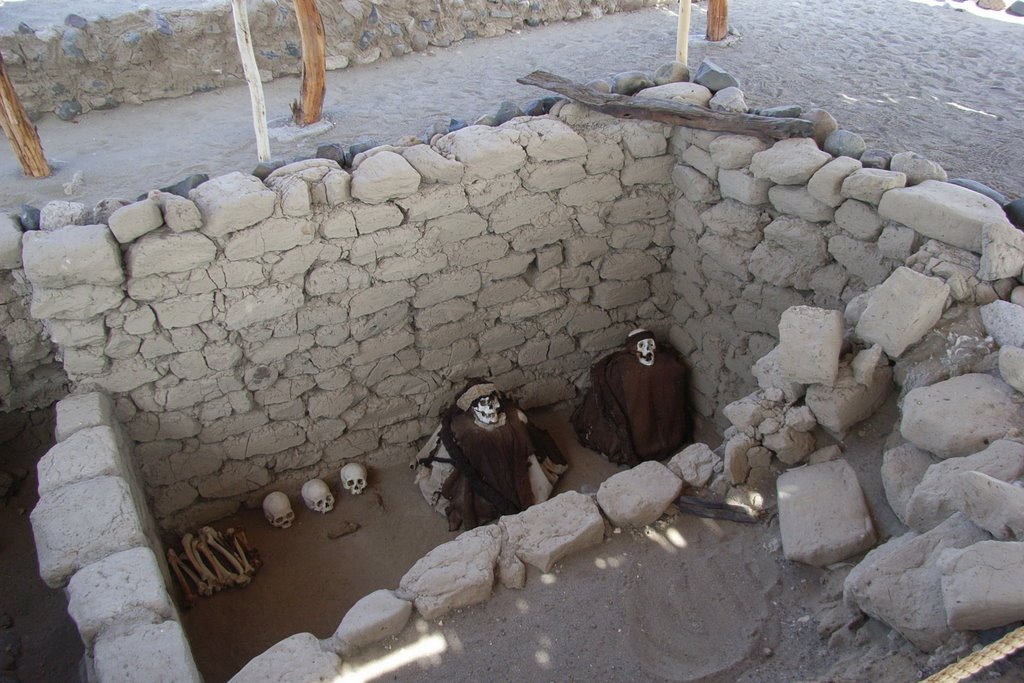
so fortunately we hadn´t eaten before we started! The patterns feature a monkey, whale, spider, condor, hummingbird, tree, hands and numerous others. Their size, precision and beauty lend weight to the alien theory - but based on what we´ve seen elsewhere, seems like the ancient Peruvians were pretty on to it. While in Nazca we also visited Chauchilla cemetery where mummies sit in opened tombs in the desert, complete with hair and skin - a bit spooky.Into altitude.........
From there we took a night bus to Arequipa. This was a great city - the second biggest in Peru - a bit slower paced and more up market - filled with great cafes and restaurants. Here we visited Juanita. She is a young Inca girl, sacrificed on top of a volcano. She was discovered about 10 years ago when a neighbouring volcano erupted and melted the snow and ice that she was buried in. She is apparently the best preserved mummy in the world - amazing to think she is over 500 years old. They think she spent her life being groomed to be sacrificed, apparently a great honour, but also quite a sad and scary fate for a 12 year old.From Arequipa we travelled into the Andes to Colca Canyon. This took us to the highest point of our trip (4,900 metres). Our guide had us chewing Coca leaves on our journey up to better equip our bodies for the altitude. They make cocaine from Coca leaves but our chewing does not put us in the A class drug user category (although apparently we may test positive for cocaine use if tested in the near future!?). At 4,900 Michelle and I made an offering to Apu (the mountain gods) for good luck - so far so good (see pic). Colca Canyon (the deepest in the world) was stunning. Our accommodation was fantastic complete with a friendly (albeit a bit frisky) pet llama. We sat in hot pools drinking red wine surrounded by the Andes.
On our second day there we visited a lookout point for condor viewing. The condors are amazing - at 3m between wing tips they are the biggest flying birds in the world and glide around effortlessly on thermoclines in the Canyon.The Inca Trail.............
We are now in Cusco and are nursing sore limbs from our 4 day trek along the Inca trail. The trek follows a path the Incas once took to reach their secret and sacred city - Machu Picchu. Over the 4 days we covered about 40 kms of track which winds up and down through the Andes. There were some pretty steep climbs - particularly on the second day where we climbed from our camp at 3,200m to the summit of a pass (aptly named Dead woman´s pass) at 4,200ms over a couple of hours. Along the way we passed a number of beautiful Inca ruins all of which were built around 1430 (although not all were finished when the Inca empire collapsed about 100 years later). Fortunately for us, we only had to carry day packs and little Andean porters carried our tents, food and sleeping bags for us! The porters are amazing - racing along in sandals making carrying huge loads making the whole thing look easy! We were really lucky with the weather, and only had a brief period of rain over the four days - not bad for the start of the wet season in the Andes. We also had a local guide - who looked like Eddie Murphy and had a sense of humour to match! (Photo is our group at the start of the trail - less the 18 porters and 2 guides for the group!).We really loved the trail. It was amazing to think that the stone track we were walking along had been built by hand over 500 years ago - sometimes it was built out along cliff faces, had spiral staircases and tunnelled through rocks. Mindblowing. The sights along the way were also spectacular. The vast expanse of the Andean mountains. Clouds pouring up and down mountains revealing and concealing lakes, snow and ruins as they did. At one point we were sitting in some ruins, covered in clouds when a thunder storm broke out. The lightening was all around us and the thunder boomed so loudly - a bit scary, but also very cool.
On day 4 we woke up before 4am to ensure we were the first group at the check point at the start of the 2 hour path to Machu Picchu. Having done this we raced the last part of the track so that we could be among the first to the ruins. We arrived at Machu Picchu to find it covered in cloud - but it slowly emerged as we sat and watched. It is an amazing place and its scale and the precision with which it is built is mindblowing. The site was not ´discovered´ until about 1915, although locals knew of its existence. Fortunately it was not found by the Spanish when they conquered the Incas, and so unlike many other Inca sites, was not destroyed by them. We had a whole day to enjoy the ruins and we took the opportunity to climb a mountain that overlooks Machu Picchu to get an amazing view of the entire site from the air (see pic above). Picture below is Machu Picchu emerging from the mist... very cool to see.
So there we have it. And all that (and more) in just 3 weeks! We have about 10 days left on the tour, which will take us to Bolivia. Thanks for your emails and comments. Disappointing to hear that Wellington let Waikato take the NPC - at least it wasn´t Canterbury though. Hope this finds you all well. Will be in touch soon.